Showing posts with label The 1980s - a search for the romantic decade. Show all posts

Monday, October 10, 2011

More than just post-modern


Recently I was driving past Wisbech and on a nondescript roundabout I saw this 1980s building.  Originally an office block, it is now an hotel.  Not sure who the architect was.

This is more than just post-modern, it seems to be a complete and authentic revival. 

Wisbech is one of the finest Geogian towns in England, although hardly anyone knows this.  The area has experienced excessive immigration over the last ten years, with many of the eastern Europeans unable to pronounce the town's name properly.  This has led to many locals referring to the town as "Wisbekistan".

Sunday, September 25, 2011

Is it possible to trace the origins of British postmodernism to Chicago?


Above:  another irritating review of the Victoria & Albert Museum's Postmodernism exhibition, this time by Tim Adams in the Observer.  Irritating because it is yet another commentator who obviously has no sympathy for the subject, which makes you wonder what the point of his witterings are, if all he wants to do is be disagreeable.  Perhaps the Left is so committed to modernism that they cannot tolerate the reality that the modernist style was overthrown in the popular imagination long ago, despite new atrocities such as The Shard getting through (perhaps the pro-modernists secretly believe that the proletariat should once again be confined to Ronan Point-type tower blocks, with anyone complaining about the smell of gas sent to a Health & Safety re-education camp).
  
That said, it seems there are limitations to the exhibition.  Kirsty Wark on the Review Show complained that it had little intellectual underpinning.  For various reasons it is likely to be some weeks before I can get to the exhibition myself, but in the meantime I have been doing a little research of my own.

For instance, is it possible to trace the origins of British postmodernism to Chicago?


Above:  in 1980 there was a major exhibition at the Camden Arts Centre of Chicago Imagists.  The exhibition is now long forgotten, but at the time attracted a lot of attention.  The Camden Arts Centre is no longer among London's premier visual arts venues, but in 1980 it was at the heart of discussion (particularly as so many artists lived in Camden).


Above:  the Who Chicago? exhibition later travelled to Sunderland, Glasgow, Edinburgh and Belfast - so a good proportion of the United Kingdom's arts community would have seen it.


Above:  the Introduction identifies a theme of reacting against the collectivisation of society and in favour of the individual.


Above:  another article in the catalogue (which is 210 pages long) talks about "straying from Modernist values".


Above:  many of the artworks that were in the exhibition (and illustrated in the catalogue) seem to chime with postmodernism.  I am not an art critic, but even I can see a resemblance between these paintings by Ed Paschke and the postmodernist performance art of Leigh Bowery.  And postmodernist artist Jeff Koons used to be Ed Paschke's assistant.


Above:  we should not forget the other anti-collectivist philosophy that came out of Chicago at the same time.  Milton Friedman's Free To Choose was published in 1980 and changed the economics of the western world.  As I said in a previous blog post, I think the essence of postmodernism is contained in the phrase "free to choose".

But as I say, I havn't yet seen the exhibition.  These are just a few of my initial thoughts.  I might go to the Victoria & Albert Museum and come away with a completely different perspective.

Thursday, September 01, 2011

Come On Eileen


One of the more persistent noises from the 1980s, still echoing today, is the song Come On Eileen by the band Dexys Midnight Runners.  The music has an hypnotic quality which transends the banality that usually stems from over-familiarity.  The video was directed by Julian Temple and has a wistful, melancholy quality.


Recently I was in south London and made a slight detour to walk along Brook Drive where the video was filmed.  The corner shop is still there, although under new management (what had happened to "Vi" I wondered).  It was if the pavement still vibrated with the music.

Tuesday, July 19, 2011

Pravda


(screenprint above)

Today's hearings of Rupert and James Murdoch (and Rebekah Brooks, and the dodgy police chiefs) before Select Committees of the House of Commons makes me wish the National Theatre would revive the 1985 production Pravda by David Hare and Howard Brenton, preferably followed by an updated sequel (shown consecutively like Henry VI Parts I & II and III).

This crisis needs to have a cultural memorial.

Tuesday, July 05, 2011

1980s architecture

There have been various items in the news recently about 1980s architecture and how it is now eligible for "listing" (a process whereby selected buildings are put on a list that must be preserved for the future).  The Broadgate development has been exciting comment, but there are many other examples that should be considered.  Here are some of my random thoughts (slightly distracted since I am simultaneously watching Newsnight).

Above:  I went to look at Broadgate which was opened by Margaret Thatcher in the early 1980s.  I was immediately struck by how it resembles the Colosseum in Rome.  This architecture represents, symbolically, the competitive nature of corporate finance in the 1980s - the office as arena.


Above:  my favourite 1980s building is not in London but in Stevenage.  This is Kings Court, designed by Cullearn and Phillips and put up in 1988.  Cullearn and Phillips did some nice work in the 1980s, especially in Manchester.  Although this is a big utilitarian building the use of classic motifs gives it a human scale.  It also has a sense of luxury, which is unusual in an office block.  The building is well-known because you can see it clearly from the East Coast Main Line (one day I got off at Stevenage, walked about half a mile, and took this picture - but this view does not compare to the impact created by seeing the building from a moving express train, a mirage of the 1980s, shimmering with reflected light).


Above:  I also like this little terrace in a provincial town.  No idea who the architect was - probably put up by a jobbing builder.  The pedimented doors are lovely - the 1980s fetishised home ownership, and here we see the humble flat treated like a temple.


Above:  the use of classic motifs in 1980s architecture makes me wonder whether classicism can be traced in other elements of 1980s culture.  Here you can see a screenshot of a live Duran Duran concert in 1984.  The set design features a Doric propylaeum that could have been designed by Albert Speer.


Above:  a selection of 1980s album designs.  The Spandau Ballet LP features a torso that resembles the ancient Greek statue Discobolus; the Ultravox LP has an illustration of various coloured marbles in the form of an idealised classic building.  The Associates EP includes a photograph of a naked, slightly podgy "Associate" (a very corporate name for a band) lying face-down on a marble floor, in a classic rotunda, while an over-dressed young woman empties a bucket of semi-precious stones over him.


Above:  two 1980s book designs.  The Foodie Handbook (1984) shows food in the shape of a Greek temple.  The 1980s experienced a huge expansion in gourmet dining.  The Jorge Luis Borges collection of short stories is a 1986 edition and features an original illustration by Peter Goodfellow.  It shows a skeleton standing beside a classical table tomb.  Reminiscent of Poussin's Shepherds of Arcady (et in Arcadia ego). 


Above:  selection of 1980s advertisements (actual tear sheets, pulled out of the magazines).  Notice the preference for black and white.  Classic motifs are associated with money and luxury, two cultural themes of the 1980s.

Anyway, I have to stop now.  As usual this post is rushed through and poorly thought out.  Maybe one day I will return to these themes and give them proper consideration.

Tuesday, March 01, 2011

St David's Day


Today is St David's Day.

The Utah Saints video for Something Good 08 is set in a South Wales working men's club (the Dowlais club perhaps) on St David's Day 1989 and supposedly captures the moment when the Running Man dance craze was invented: http://www.youtube.com/watch?v=oMLCrzy9TEs

The video was directed by Eran Creevy: http://www.myspace.com/video/vid/29295709

The minimal lyrics were sampled (but with a different singer) from Cloudbusting by Kate Bush (in turn referencing the autobiographical work of Peter Reich, son of controversial psychologist Wilhelm Reich http://en.wikipedia.org/wiki/Cloudbusting ).

The Eran Creevy video is a revival of late-flowering decadent 1980s creativity - lush, romantic, and subtly seditious.

PS have been away for a few days.

Monday, February 21, 2011

Arcadia


Above: magazine advertisement for Arcadia's So Red The Rose.

As a non-sequential post-script to yesterday’s item on “arcadia”, the word was adopted as the name of a 1980s pop group formed by Simon Le Bon, Nick Rhodes and Roger Taylor (all from Duran Duran). The name of the band was supposedly inspired by the Poussin painting The Arcadian Shepherds (in the Louvre). The band only produced one album So Red The Rose, described as “the most pretentious album ever made”.

The Arcadia initiative seems to have been entirely stylistic. No touring ever took place, and only a few television appearances. The success of this “concept band” shows the power of visual image and emotional involvement in cultural concepts.

Image, fashion and film were at least as important as the music (which seems to have been constructed from disparate elements chosen for their glamour status rather than any intrinsic musical value).

Promotional videos were directed by Roger Christian, Marcelo Anciano, and Dean Chamberlain.


Above: screenprint from a website selling Duran Duran ephemera.

Drummer Roger Taylor withdrew from most of the stylistic publicity created around the Arcadia project. This is consistent with other reports that he is wary of publicity. In most Duran Duran videos he looks away whenever a camera is pointed at him.

Thursday, February 03, 2011

Nick Love film The Business


Above: screenprint of a scene from the film.

One of the experiences of going to stay with friends is that you end up sitting on their sofa, in their living room, watching their DVDs. The Nick Love film The Business was not something I especially wanted to see, but I was really surprised at how good it was. In particular what a good actor Danny Dyer can be (usually I have only seen him briefly when flicking channels and wondering what “Real Football Factories” was about).

http://www.youtube.com/watch?v=AWx6L8Lpe9Q&feature=related


Above: screenprint of the music in the film.

The soundtrack of The Business is made up of 1980s classics. Is this the definitive list of 1980s music? If so, who chose it and what criteria did they use? (these are not just rhetorical questions – I am genuinely interested).

Tuesday, June 15, 2010

Difficulties in researching the 1980s

One of the difficulties in researching the 1980s is that you often come across references to places that were significant cultural locations before the 1980s and remained significant after the 1980s. In that respect, how far can these places be regarded as authentically "1980s"? Perhaps they influenced the decade, perhaps they were influenced by the decade, perhaps they just had their own style that continued on regardless.

Some examples:


Above: L'Escargot is one of the great London restaurants. Founded in the 1920s, during the 1980s it became favoured by intellectuals such as Melvyn Bragg and serious actors such as John Hurt. But it is still going strong today, although perhaps a bit too linked with pre-matinee trips to nearby Mama Mia.


Above: Maison Bertaux in Greek Street was founded in the 1870s but was last refurbished in the 1980s. The 1980s style still remains, relatively untouched. If you want to step back into the 1980s for a few moments, the easiest way to do so is to visit Maison Bertaux.

Presumably the interiors should be listed.

More on the cafe: http://russelldavies.typepad.com/ateaandathink/2006/04/maison_bertaux_.html


Above: I have a complex relationship with Bar Italia. Whenever I go there I feel such a phony, as if I'm trying to be something I'm not. Again, Bar Italia was famous before the 1980s and has remained famous ever since.

During the 1980s Bar Italia was haunted by teenage girls hoping for a glimpse of model Nick Kamen.

Nick Kamen appeared in one of the 1980s' defining advertisements, produced by BBH: http://www.youtube.com/watch?v=Q56M5OZS1A8

Note: there is nothing worse than being stuck in a conversation with a BBH bore (unless it is a BMP bore, or worst of all a DMB&B bore).


Above: Bar Italia appears in magazines from the 1980s, and was linked with the decade's growing obsession with Italian football (which later manifested itself as live broadcasts of Serie A on satellite television from 1990).


Above: it seems that in the 1980s ethnic diversity was limited to an Italian cafe in Soho.

Thursday, May 27, 2010

Hollinghurst


Above: one book that keeps cropping up again and again in any discussion of the 1980s is Alan Hollinghurst's The Swimming Pool Library. This is an actual copy from the late-1980s, a bit tatty, sold second-hand for 99p. The cover illustration is a representation of Michaelangelo's Dying Slave distorted as if seen through blue water.

Although now reduced to a "genre" novel, at the time the book was regarded as a serious literary work and won the Somerset Maugham Award in 1989.


Above: the book is packed with cultural allusions - to Ronald Firbank, to the Nuba of Southern Sudan, to Benjamin Brittain etc. One of the locations is a terracotta-faced hotel that can only be the Hotel Russell in Russell Square. The complexity of the text means it can be read on many different levels.


Above: Alan Hollinghurst later wrote The Line of Beauty (2004) which won the Booker Prize. The novel attracted considerable media attention for its recreation of the 1980s. As you can see in the picture, the book has become sufficiently significant as to appear in a carefully constructed image in a 2010 issue of World of Interiors magazine.

Thursday, April 01, 2010

All day the office has been ringing up

I am on holiday today.

But all day the office has been ringing up with various crises (including rousing me from my bed at 10am).

And in the afternoon two clients had "emergencies" they wanted my advice on.

I may as well have gone in to work.

But I have managed to do a little research with Kim Blacha on the cultural influence of the 1980s.

Including coming across this update of Toto's Africa:

http://www.youtube.com/watch?v=Qj_apHSFDgQ

Tuesday, March 16, 2010

The Independant


Interesting article in today's The Independent about swifts. The article was written by McCarthy and is very clear and informative. I had forgotten how good The Independent can (sometimes) be.

The Independent newspaper was a quintessential product of the 1980s. When it launched in 1986 it was widely acclaimed as the most beautiful British newspaper ever produced, with elegant layouts, and innovative typeography. From the beginning, the writers set a very high standard of journalism, genuinely independant of political affiliation.

Inevitably compromises were made as the newspaper came under financial pressure and made a series of editorial changes. The current production standards are very poor (as you can see from the photograph, a pinkish tinge mars the page). The standards of journalism have fallen, with writers such as Johann Hari and Yasmin Alibhai-Brown adopting a camp quasi-outrageous style that masquerades as "provocative".

Friday, February 05, 2010

Relics of a vanished civilization


Above: Suit by Paul Smith, 1988. The suit made of wool, the shirt is cotton and designed to be worn without a tie, the shoes are canvas. The jacket is double-breasted with wide shoulders.


Above: Evening dress with jacket by Catherine Walker, 1989. Silk with oyster pearls and sequins. Worn by the Princess of Wales in 1989 on a visit to Hong Kong (then a British imperial possession).


Above: Wedding dress with bridesmaids’ dresses by John Galliano, 1987. Ivory silk with satin and chiffon flowers. Designed for a summer wedding and fully representing the romantic style of the 1980s.


Above: Photograph from the actual wedding.

These artifacts were in a darkened hushed gallery in the Victoria & Albert Museum. They seemed to be the relics of a vanished civilization. Students sat about reverentially sketching the items.

Thursday, August 13, 2009

"Young upwardly-mobile professionals"

This post may seem a little thin, but I hope to add to it and develop it into a section for Kim's book.


Above: Diary of a Yuppie by Louis Auchincloss. Much of the literature of the period was written by American authors who were less inhibited than their British counterparts at recording changes in society in the 1980s. Bright Lights Big City by Jay McInerney, Slaves of New York by Tama Janovitz and Bonfire of the Vanities by Tom Wolfe are examples of this genre. In the United Kingdom Michael Bracewell is the most vivid chronicler of the yuppie demographic. Other British writers such as Robert Elms (In Search of The Crack) and Rupert Thomson (Dreams of Leaving) chose to ignore the yuppies that populated the 1980s London they were attempting to describe. This refusal to face reality is interesting in itself and deserves further study.

Yuppie was originally a marketing term that sought to identify and segregate a demographic known as "young upwardly-mobile professionals". Because this group was characterised by large disposable incomes and a willingness to spend freely on aspirational status items it was often the target of marketing campaigns. Although vilified today, yuppies characterised the 1980s, and the demographic represented a mechanism by which working class people who had entered well-paid jobs were recruited into the middle class (and through the purchase of private education for their children were able to propel future generations into the upper-middle class).

This is a particularly difficult subject to research since nobody today will admit to having been a yuppie, although in reality a huge section must have fallen into this classification, and an additional group (almost as large) assumed the identity of a yuppie and funded their yuppie lifestyle through credit.

Simultaneous with the emergence of yuppies was the "discovery" and recording of the Sloane Ranger demographic (I use the term "discovery" since some elements of this group were of considerable antiquity, although other attributes were new and a few traits were invented and projected onto the sub-class). Researching the Sloane Ranger class is problematic since the field is dominated by Peter Yorke, former editor of Harpers & Queen magazine. Effectively a Sloane Ranger was whatever Peter Yorke said it was (and equally if he said something was not Sloane Ranger it is hard to argue against him). Sloane Rangers appear to have been (I use the past tense since once again, no-one today will admit to having been one) a melange of lower aristocracy; London relatives of the landed gentry; and urban rich people (with oldish fortunes and private educations). This generally unremarkable collection of inter-connected families would have remained in obscurity were it not for the marriage of Lady Diana Spencer to the Prince of Wales in 1981 (in what must have been the upwardly-mobile act of the century since it was the first time a commoner had married the heir to the throne for several hundred years).

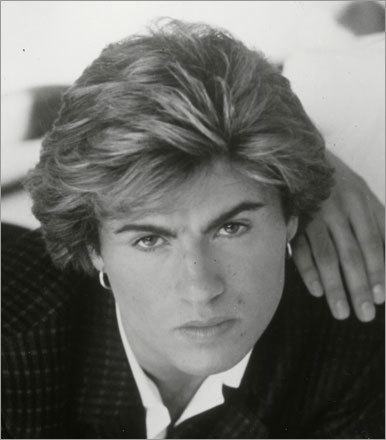
The shinto-like worship of the Princess of Wales by all classes led to the Sloane Ranger style (which she epitomised and popularised) becoming a mainstream phenomenon. In what can only be described as the mass indulgence of sympathetic magic a plethora of imitative behaviours and purchases resulted in an unusual social construct whereby the Thatcher revolution in society was masked by the re-emergence of a very traditional and conservative lifestyle (just as society was becoming atomised and individualised it was dressed up in the clothes of extended families and collective country communities, change was disguised as continuity). This led to some unexpected coincidences - when the Princess of Wales waved her hair in a particular style George Michael and a million others dyed their hair blonde and waved it in the same way.

The question asked by this chapter is how far (if at all) yuppies merged into Sloane Rangers, what was the process by which this happened, and when did this process start and finish.

Being interested in issues surrounding branding, I will attempt to answer the question by referring to the way in which very traditional luxury brands were, during the 1980s, sold to yuppies as a way of attaining and confirming their new upmarket status. I only have a few examples at present, but I hope to add to this post in the coming weeks and months. If anyone wishes to contribute to this study do please let me know.


Above: this is a modern artwork by Grayson Perry but it illustrates the way in which luxury brand names formerly synonymous with the aristocracy have entered popular consciousness (Dior, Chanel and Hermes were particularly exclusive and expensive brands, far more than they are today). Personal identity, which originally was conferred by family, religion, political allegiance, cultural upbringing, occupation, sporting clubs etc is now acquired by shopping for brands, and even wearing clothes where the brand name is prominently displayed. Acquisitive materialistic shopping has replaced religion as a provider of solutions to the insecurity and guilt which most people feel most of the time, and this transition began during the 1980s.


Above: the Hermes store in Sloane Street. Prior to the 1980s the Hermes brand cultivated exclusivity and reputedly instructed their sales assistants to deter people they did not like the look of from entering their shops. Increasingly however their products were made more accessible (“Sloane Ranger novelist Charlotte Bingham wrote about characters who gave Hermes scarves to London debutantes – you can see this in her nineteen eighty-three novel Belgravia”).


Above: this profile of Hermes designer Eric Bergere appeared in 1986 in the magazine Blitz (which had a high yuppie readership). Is this evidence of cultural transition? Today Hermes products have completed the journey from badges of a closed social caste to signifiers of material success (women will pay ridiculous amounts of money for an Hermes handbag and will insist their life is incomplete without one).


Above: just as interesting as the brands which made the transition to popular consumption are the ones that did not. Smytheson was another brand that defined the Sloane Ranger demographic, and yet it was not taken up by yuppies (who presumably bought their writing paper from Paperchase). Why was this?


Above: I thought initially that it was because of a decline in letter-writing, and yet the Royal Mail ran a major campaign during the 1980s promoting the writing of personal letters. The ads are romantic in style and talk about the way in which hand-written letters have a permanent quality. Obviously there was no e-mail in the 1980s.

Sloane Ranger icon HRH The Princess Of Wales: http://farm1.static.flickr.com/119/311906117_a41c5592c3.jpg

Yuppie icon George Michael: http://cache.boston.com/bonzai-fba/Globe_Photo/2008/05/16/1210959930_4463.jpg

For more on sympathetic magic see the relevant chapters in The Golden Bough by Sir James Frazer.

Thursday, April 16, 2009

1980s gothic revival

I have been doing some research for a chapter in Kim Blacha's book on 1980s style. This section looks at the influential (but now almost entirely forgotten) gothic revival that took place in the arts throughout the decade. I am never happier when doing research (even media research for sealants or children's toys) and I found this assignment fascinating.


Above: interest in the gothic during the 1980s seems to have originated in antiquarian research, especially around the social topic of chivalry (previously mostly ignored by English historians). John Boorman made his visually influential film Excalibur in 1981. Maurice Keen wrote his 1984 seminal work on the subject entitled (unsurprisingly) Chivalry. There was a sensational major exhibition at the Royal Academy in 1987 called The Age of Chivalry (this exhibition was probably responsible for the transition of the gothic style from specialist to mainstream interest). There were numerous minor exhibitions with a chivalric theme. It was as if archaeological "discovery" around the topic of chivalry had led to a fashion for gothic in all the fine and applied arts.

More on Keen: http://www.amazon.co.uk/Chivalry-Maurice-Keen/dp/0300033605/ref=sr_1_2?ie=UTF8&s=books&qid=1239913276&sr=8-2

More on the Royal Academy exhibition: http://www.historytoday.com/MainArticle.aspx?m=13110&amid=13110

More on Excalibur: http://www.youtube.com/watch?v=soWyMan6FH0&feature=related


Above: among the commercial enterprises adapting the gothic style for consumer goods was Soho Design based at Poland Street and also at 263 Kings Road (which you can see above - it is now a light shop).


Above: designer Peter Leonard produced for Soho Design this modern interpretation of a gothic-backed chair (this is an actual chair, photographed by myself).

More on Peter Leonard: http://www.nytimes.com/1987/11/12/garden/the-other-london-where-chintz-is-out.html


Above: the chairs rapidly achieved "mediasaturation" and became a design classic.


Above: Soho Design harvested media interest with clever promotional campaigns.


Above: Soho Design also used the gothic style to reinterpret other aspects of interior design such as this clock.


Above: mainstream confirmation of the 1980s gothic revival came when Laura Ashley (a leading 1980s brand) brought out its own range of gothic furniture and wallpapers.


Above: the 1980s gothic revival influenced architecture throughout the decade, most notably in Quinlan Terry's Gothic Villa overlooking Regent's Park.


Above: the gothic influence was reflected in music - including Kate Bush and Billy Idol (need to so a lot more work on this).

Billy Idol's 1982 White Wedding: http://www.youtube.com/watch?v=zQ1OidOK7Js&feature=related (best quality I could find).


Above: Eighties gothic influenced literature, including Patrick McGrath's collection of short stories Blood and Water published in 1988 and AS Byatt's superlative Possession published in 1990 (but undoubtedly a product of the 80s).

In fine art I need to research the Brotherhood of Ruralists which self-consciously modelled itself on the Brotherhood of Pre-Raphaelites: http://ruralists.com/index.html

And that's as far as I have got. I may come back and add bits to this post as I find out more information. Perhaps the Design Museum might put on an exhibition about 1980s Gothic.