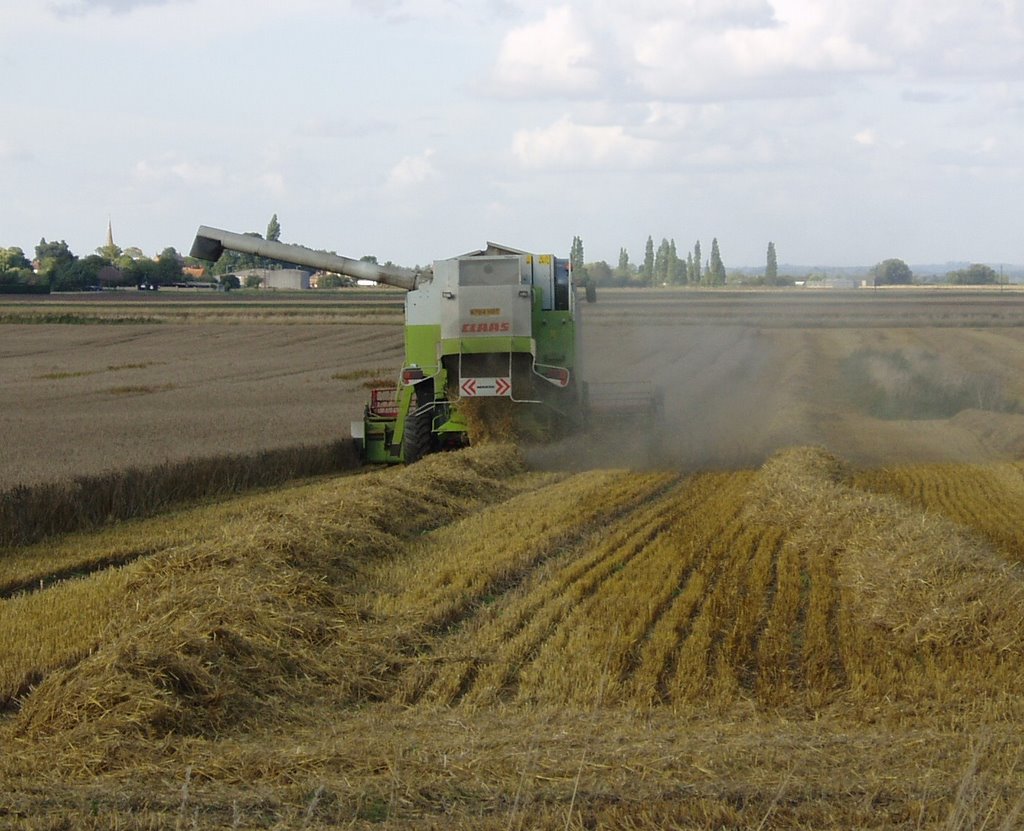
Above: giant haystacks down on the plain (Giant Haystacks was also the name of a wrestler in the 1970s). The harvest in most of the county seems finally to be gathered in. Combine harvesters do the cutting and threshing all in one, the grain being transported to grain silos and the straw baled for cattle litter. Before mechanisation the corn was cut by lines of scythe men (note to US readers: corn in England means grain, not maize). The women of the village followed behind, tying the sheaves and standing them up to dry. The sheaves were then carted back to the farmyard to be threshed. The straw was baled and put into stacks. To protect the stacks from the winter weather they were usually thatched (like a house). Elaborate straw finials were put onto these temporary roofs to denote ownership of the stack and also ward off bad luck (http://www.strawcraftsmen.co.uk/finials.html).

Above: sheaves of wheat are used to decorate the churches ready for the harvest festival (held towards the end of September). One sheaf was always left standing in each field, traditionally because it was the abode of the “corn spirit” and needed to be cut and carried to the church in a ceremonial way to placate the supernatural forces which governed village life. There is evidence that farmers encouraged belief in these old practices to control the activity of gleaning – gleaners would not go into a field until the last sheaf had been cut.

Above: sieves (or riddles) decorated with flowers and put up in the chancel of the church. The frame of the riddle would be made from thinly-split pine wood, with the mesh formerly made of horsehair (but now almost always metal). The surname Riddler indicates someone who would winnow grain with a sieve.
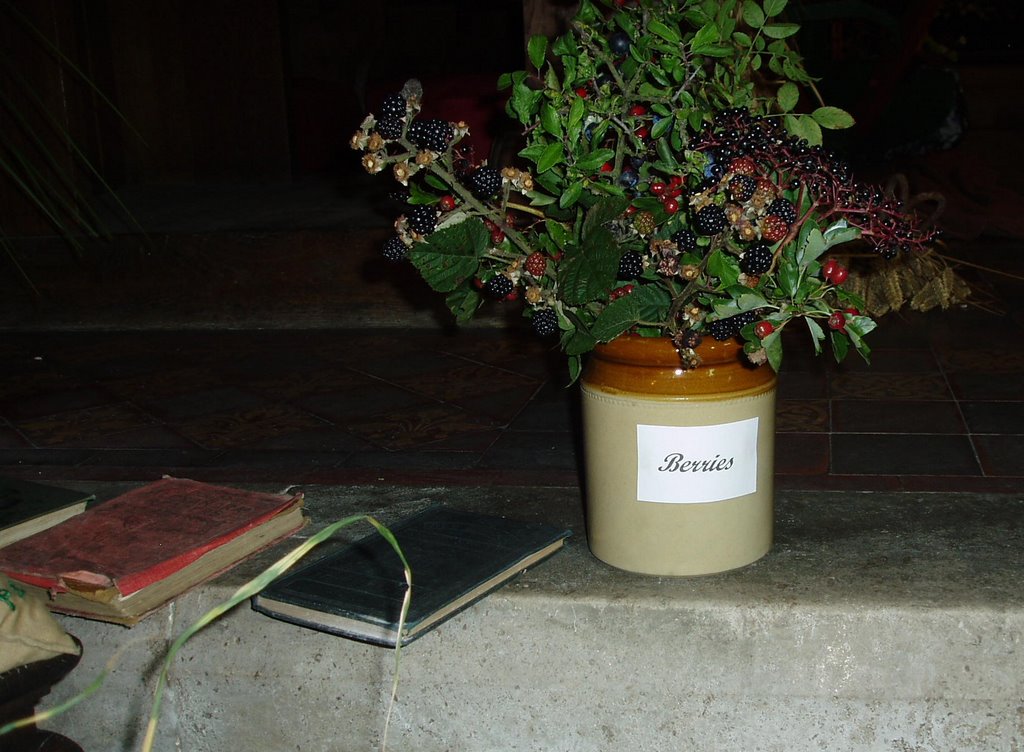
Above: hedgerow berries used to decorate the chancel steps.
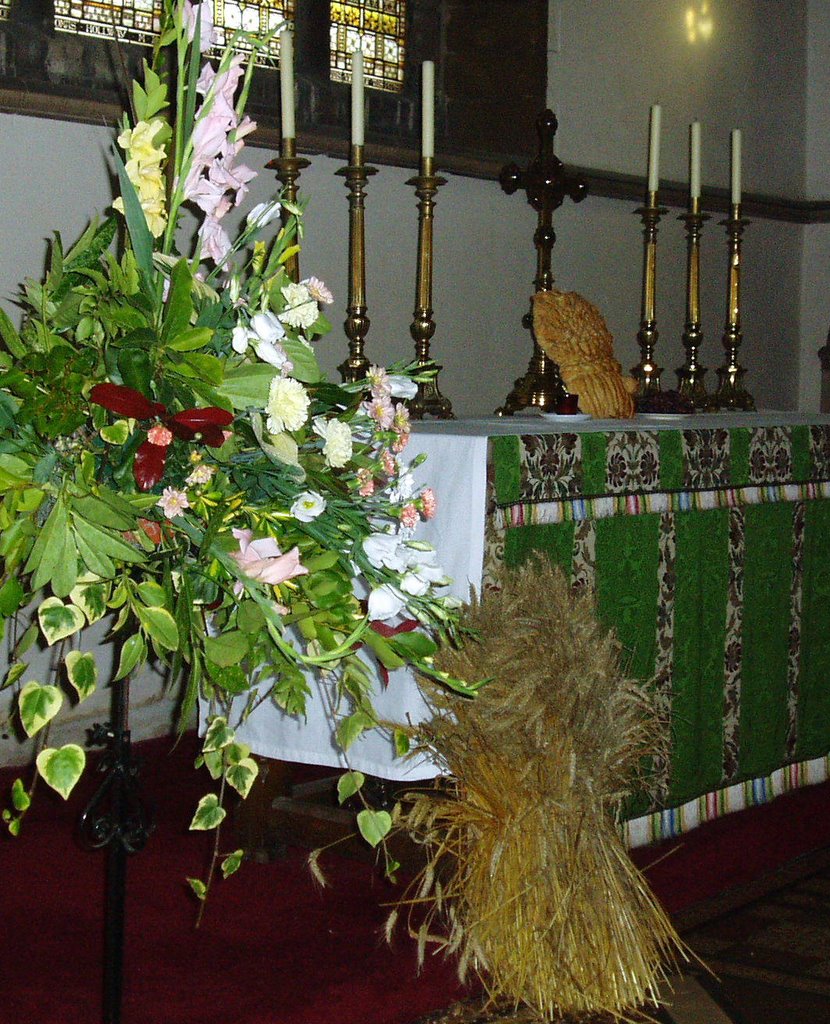
Above: sheaves of corn have been placed on either side of the high altar. The last sheaves of wheat from each field would be cut and brought back to the village in a procession. The grain from the last sheaves would be ground and the flour used to make a special harvest loaf in the form of a sheaf of wheat. This loaf has actually been placed upon the high altar. Puritan critics in the 16th century condemned such practices as blatant worship of the corn goddess (Ceres in her Romanised form). However, the incorporation of pre-Christian symbols into Anglican rituals dates from St Augustine’s mission to the Anglo-Saxon kingdoms (http://www.heraldav.co.uk/showdisk.php?diskNum=200) and was intended to demonstrate that Christianity had supplanted the religious beliefs (mostly nature cults) of the Angles and Saxons.

Above: in my cursory interest in the customs of the county (it really isn’t my primary focus – I just record these things in case they should vanish without trace) I had hoped to find an example of the procession “bringing in the sheaves” from the fields to the church. I managed to find on the internet the above Victorian drawing which illustrates the ceremonial march (apologies to whoever owns this image – I copied it without noting the url). I also managed to locate a procession that was held annually each harvest at a small village down on the plain, but the last one had been held eight years ago. Then the trail went cold. There were lots of anecdotal accounts by people who remembered such processions in their childhood (shire horses decorated with coloured ribbons, maidens of the village traveling on the cart ringing hand-bells, traditional songs etc). But none of the villages (on the plain or the escarpment or the uplands) still held a procession, so that I thought the custom had finally died.
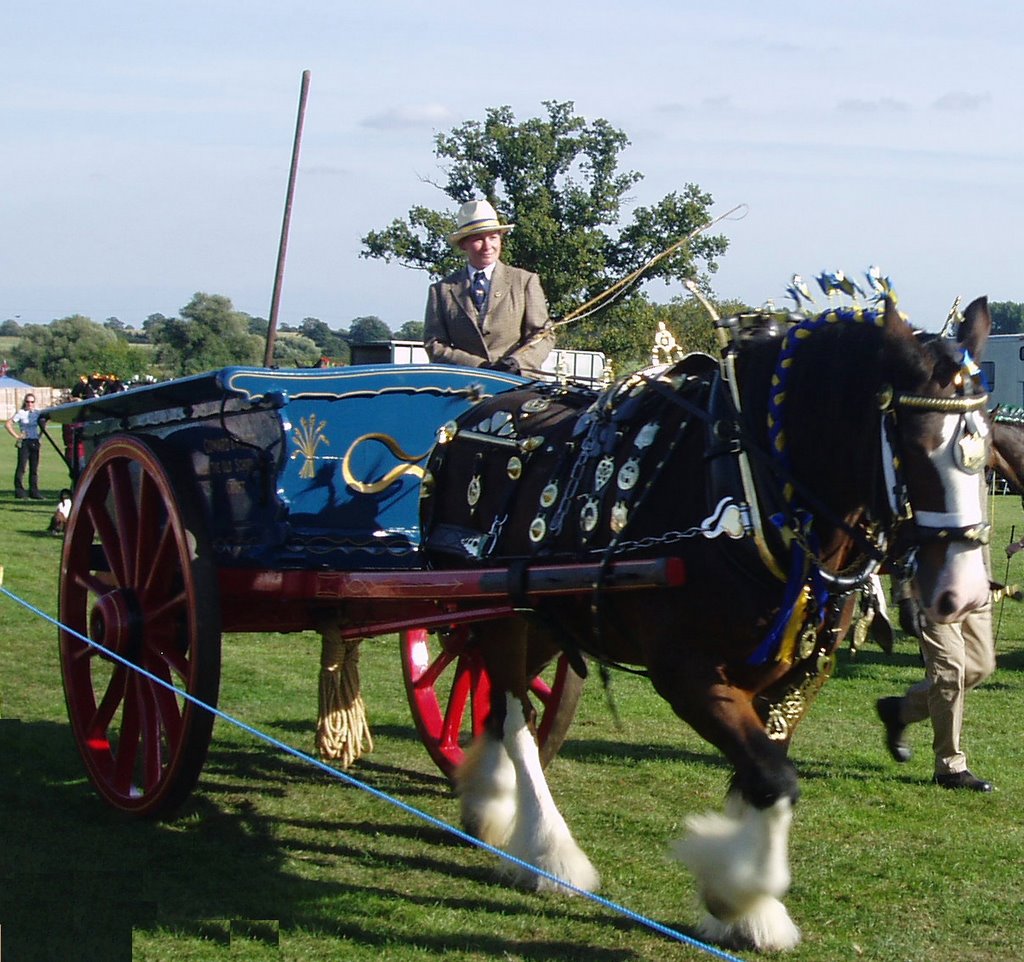
Above: then I went to a museum of rural life where the theme of the weekend was “the harvest”. I had actually gone there to see an exhibition of shire horses. At the end of the afternoon all the horses gathered in the central ring. Each horse had been carefully groomed and decorated with coloured ribbons. Furthermore, at the end of the parade was a shire horse decorated with ribbons and horse brasses, and pulling a wagon painted with wheatsheafs. Although just an exhibit at a “living” museum, it appeared to be an authentic portrayal of the ancient performance. Because working horses were so valuable they were “protected” by horse brasses – amulets made of brass and incorporating lucky symbols. Hundreds of thousands of these horse brasses still survive, and they can be bought quite cheaply at antique shops. There are about four thousand different designs, the earliest ones being crescent-shaped.
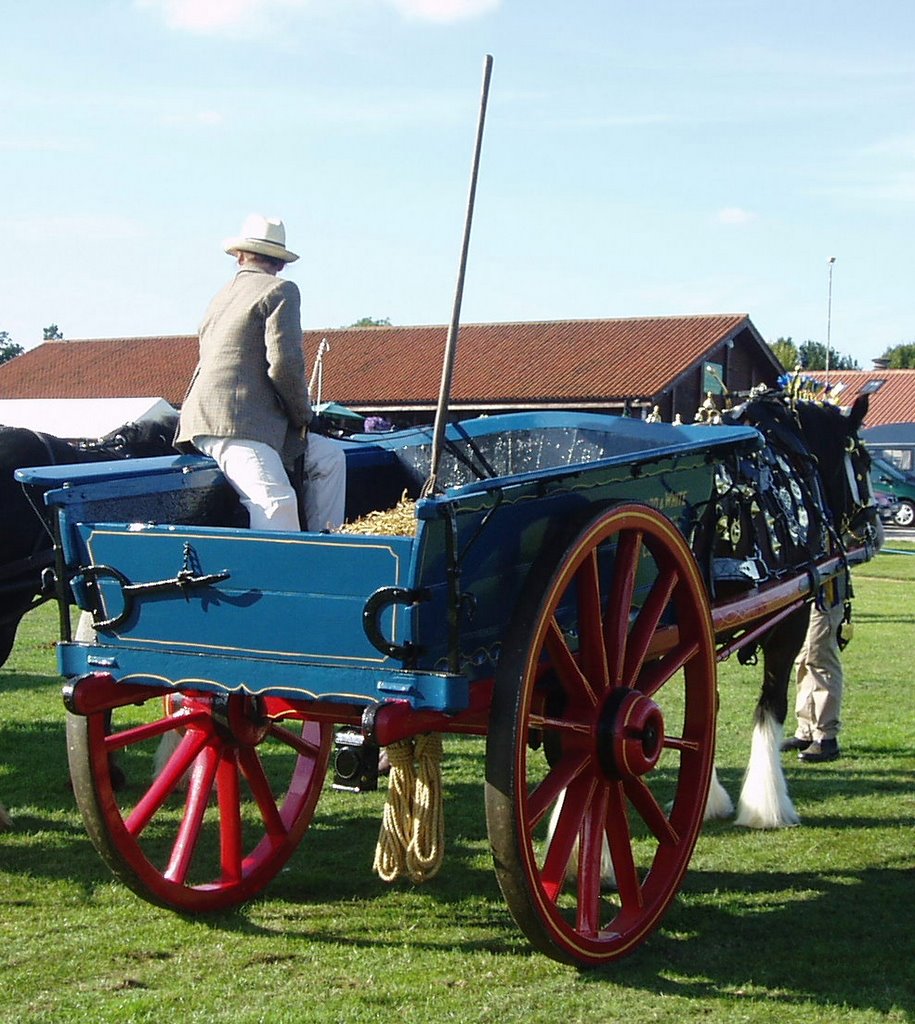
Above: the wagon had been loaded with a sheaf of wheat, a pitchfork stuck into it (but no virgins ringing handbells!).
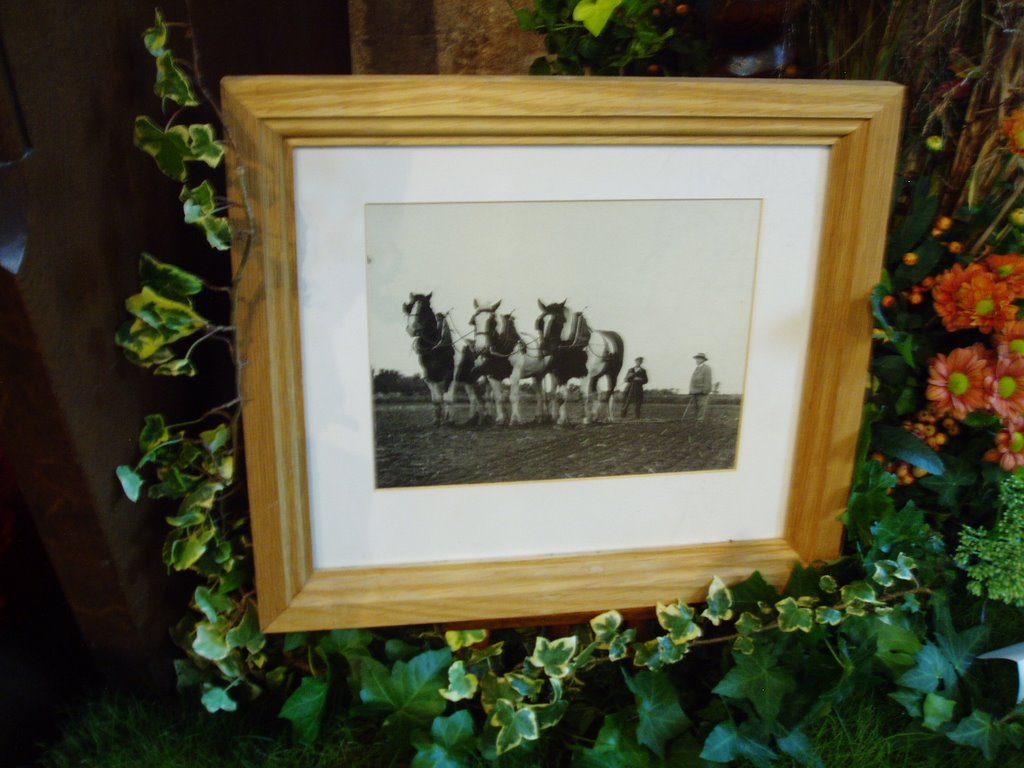
Above: in the church was this black and white photograph, obviously pre-Second World War, garlanded with flowers. It shows heavy horses pulling a plough. Until the 1940s millions of shire horses were employed on British farms. Horse power was the main means of getting things done. A farm of a hundred acres would usually require three heavy horses, plus horses for hunting and transport. Now if a farm keeps horses it is usually for sentimental reasons.
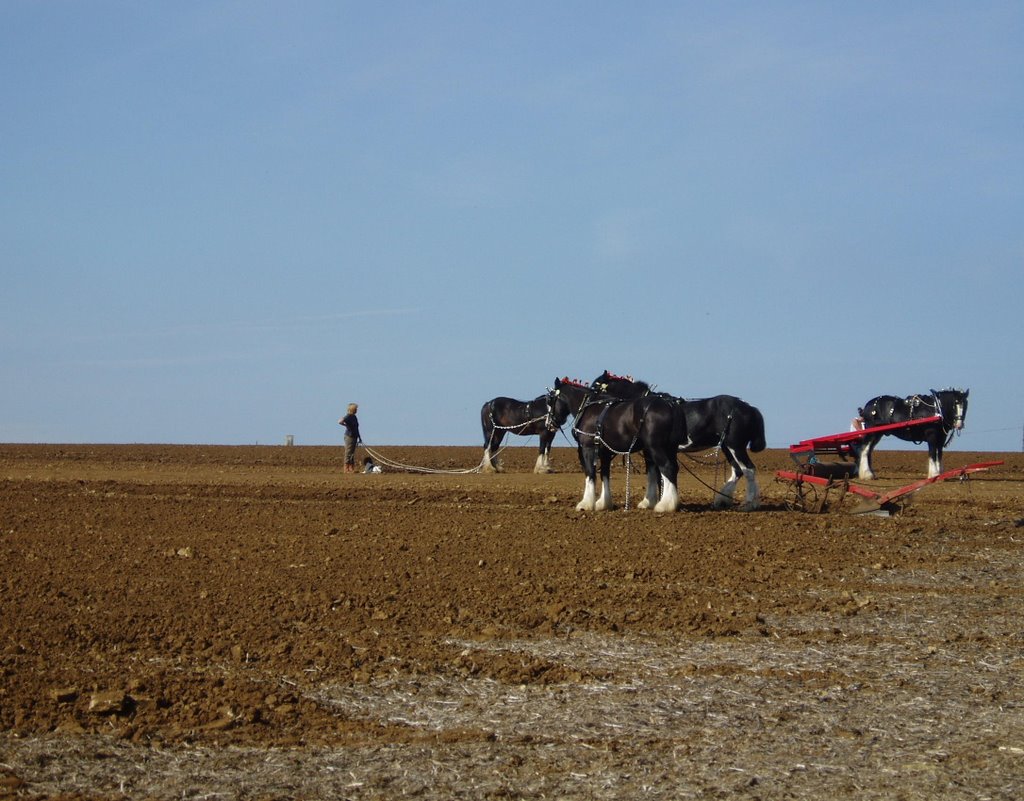
Above: at the museum of rural life was a demonstration of ploughing using shire horses. I think this is one of the best photographs I have ever taken (something to do with the horses outlined against the sky – it just seems to be very moving). You might have to click on the image to get the full impact.
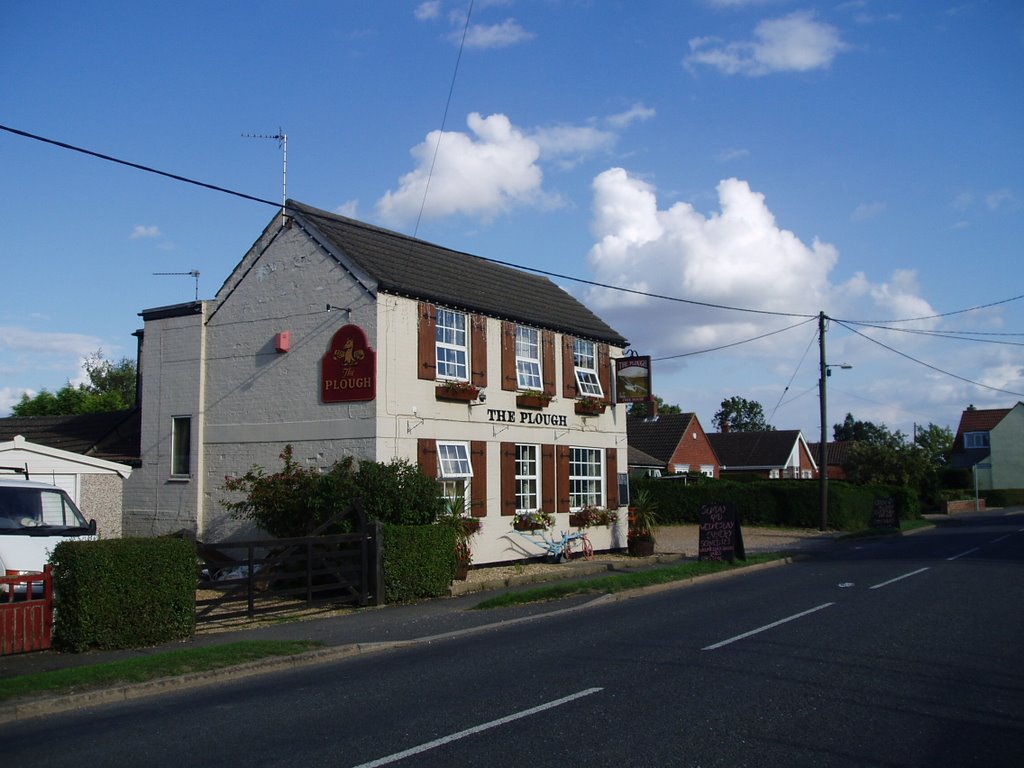
Above: after the harvest was brought home there were harvest suppers (with apple pies) – either in the farmhouses of the wealthier farmers or in rooms at local pubs. Part of harvest culture relates to the full moon that appears in late September, known as the Harvest Moon. This moon rises at a point opposite to the sun, and because it is so low in the sky often has a yellow tinge (one of the more famous representations of the Harvest Moon is by Samuel Palmer http://www.artcyclopedia.com/artists/detail/Detail_palmer_samuel.html?noframe – note: the routing of the M25 motorway through Samuel Palmer’s “valley of vision” was a terrible blow to conservationists everywhere).