I have been off work for the last few days, but although I took the time as “holiday” it has not been at all relaxing. Because we were having building work done at the house I had to be up before the builders arrived and so have been permanently tired. Then on Tuesday evening, when eating some peanut toffee (a thick slab with the consistency of concrete) I broke a molar tooth and entered upon a sustained period of blood, pain, and disorientation that culminated yesterday with the dentist wresting the remains of the tooth from my jaw, leaving me with a sore mouth and feeling depressed (“You shouldn’t have any pain now” people in the office say unsympathetically).
But there have been interludes to the gloom of the last week. One evening I went with Gary Spencer to the Opening of an exhibition of photographs of the Brazilian soccer player (retired) Pele at the Getty Images gallery in Eastcastle Street. Pele himself was rumoured to be attending the Opening Night, but we didn’t see him (unless he had been and gone by the time we got there).
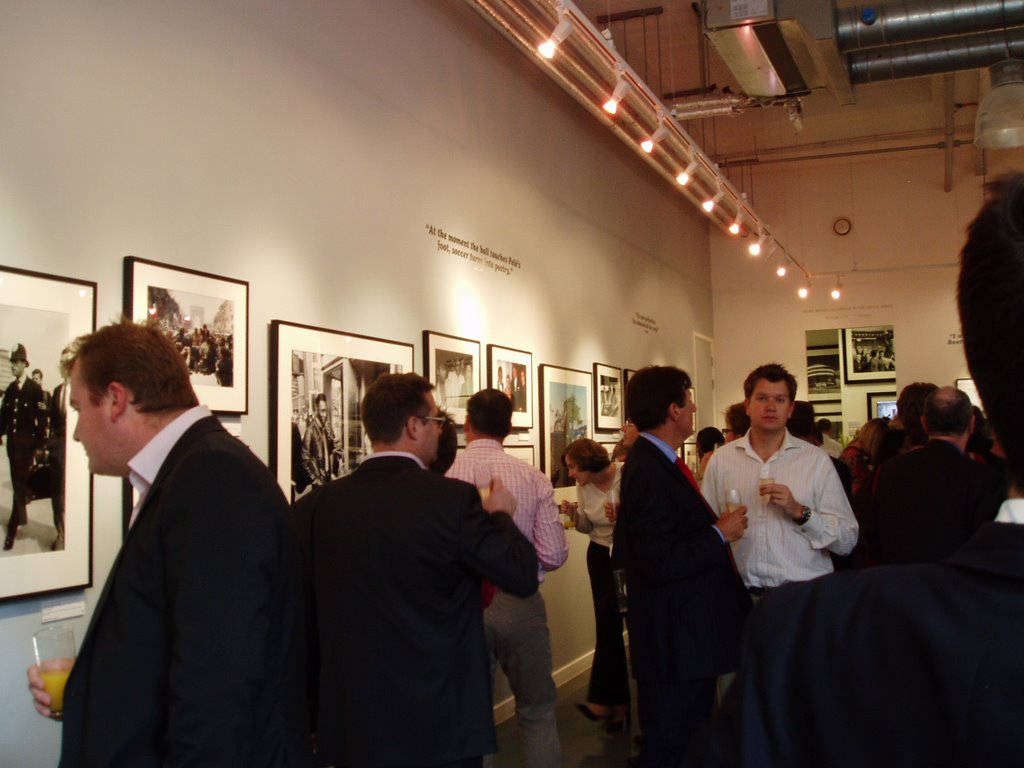
We went from the hot street outside into the gallery, which was crammed with (mostly) youngish people (mostly) talking to each other and (mostly) ignoring the photographs. The event was invitation-only and the people invited seemed to be designers, advertising executives, marketing people (“Sir False” as Shakespeare would categorise these professionals). I am always slightly uneasy when in the company of large numbers of my marketing colleagues – don’t know why this should be, since no-one forced me to go into marketing.

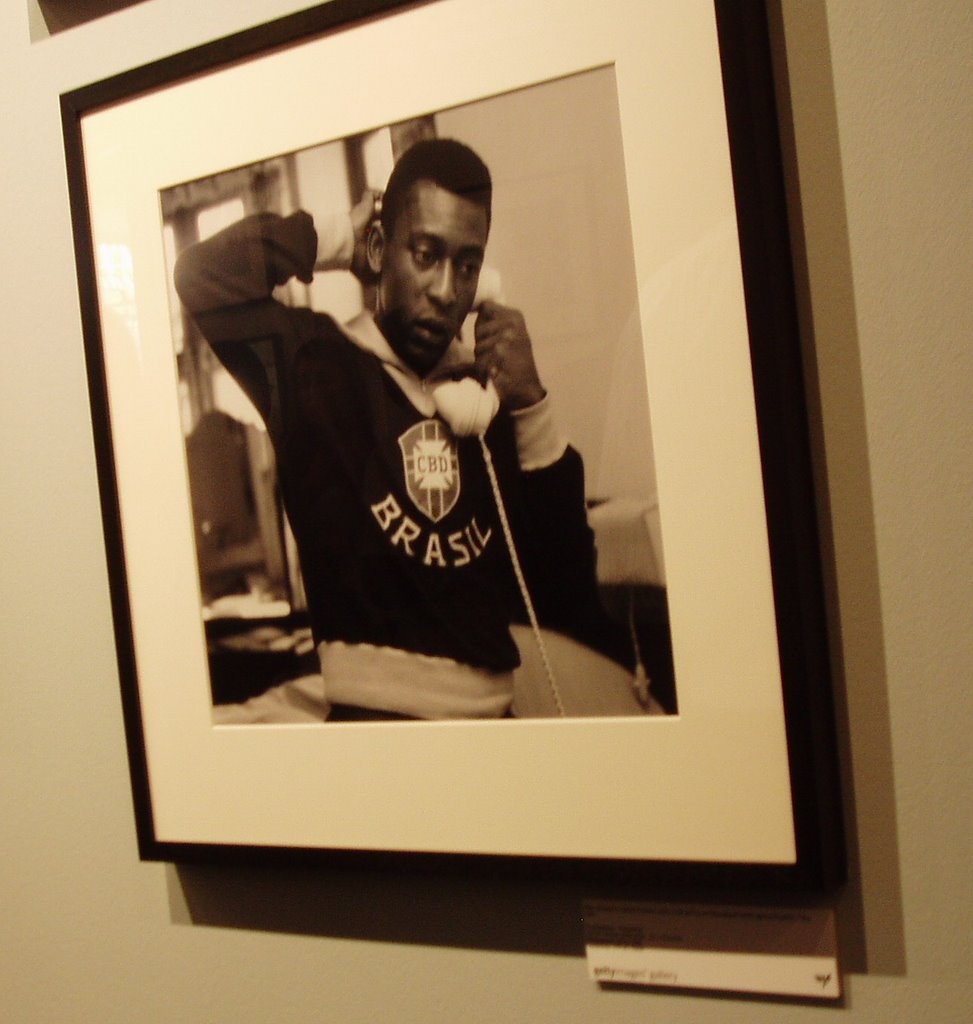
So trendy was the event that it resembled a Will Young video. Pink spotlights accentuated the vie en rose atmosphere. Waitresses brought round glasses of chilled champagne and plates of canapés. A DJ in the corner played samba music and a soundtrack of whistles and drums. The large front gallery was hung with about two hundred black and white photographs of Pele at various stages of his footballing career. He is seen with a vast number of celebrities, including Frank Sinatra, Audrey Hepburn, several Kennedys, his face beaming with pleasure. When he is photographed off-guard his face seemed to have a haunted look. Most of the photographs were for sale, the prices ranging from a few hundred pounds to many thousands. Gary Spencer pointed to various ones he intended to buy, ignoring the fact that his wife would veto the purchases.
 Above: When he is photographed off-guard his face seemed to have a haunted look.
 After twenty minutes we were ushered, with a few others, from the crowd in the gallery into one of the white, windowless back rooms where we met the Creative Director (black, aged about thirty five, wearing a suit but no shirt so that when he unbuttoned the jacket his defined musculature was shown off). The photographs from the exhibition, plus many others, are to be bound in a huge book, personally signed by Pele and retailing at £1,600. While we drank champagne and ate honey-glazed sausages the Creative Director gave us a sales pitch for the book.
“I used to support Spurs” the Creative Director said to Gary Spencer (presumably they had already discussed the north London team), “but now I go to see all of the great players – for me the individual has replaced the team…”
“…this is the biggest football book of all time… we profile Pele’s Santos years, which you will never see in any other book… we even have Pele in the army, which we got when we went out to Brazil tracking down unpublished photos…”
“…we have a big section analysing the Pele style… Pele was the first footballer to have an impact on fashion… he was the first sportsman to wear a tracksuit outside of training… here he is wearing his tie tucked into his shirt… the yellow jersey became iconic after 1970 when the World Cup was first broadcast in colour… he was incredibly influential, just from the things he did naturally and which other people copied…”
We were in the presentation about half an hour. After a while the subject of Pele began to assume mega proportions and I began to suspect that the Creative Director had become obsessed by his enthusiasm for the player. All the time we were there our glasses were replenished (as soon as they were empty) and plates of sausages were brought in.
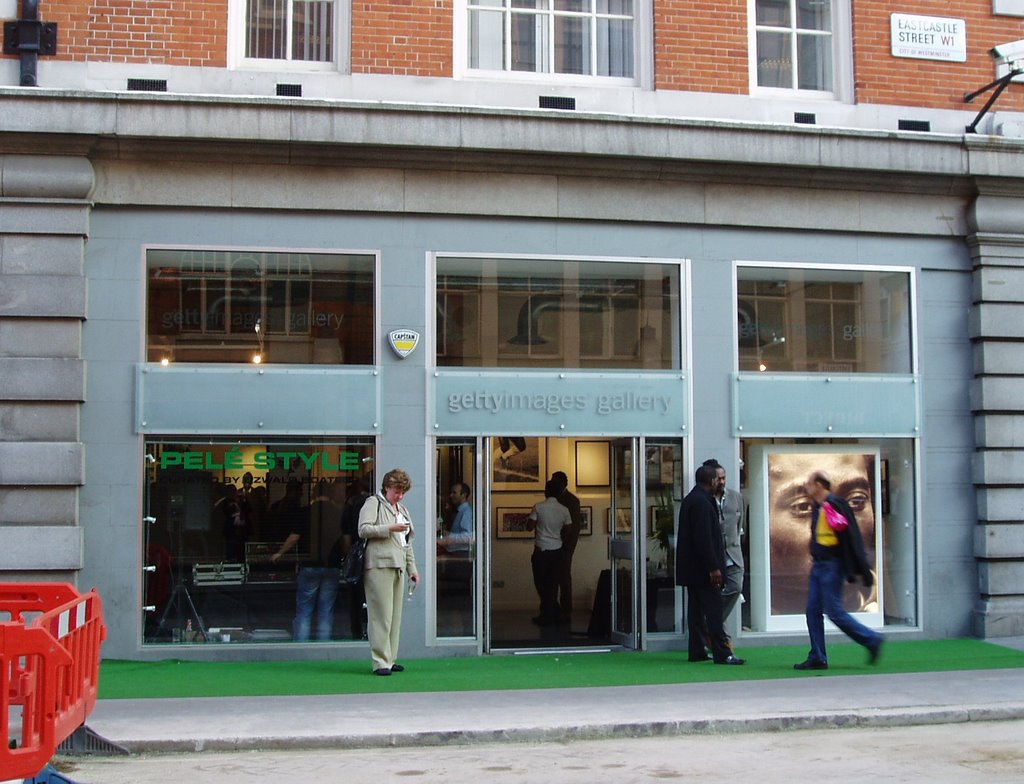
 Above: the Getty Images Gallery in Eastcastle Street. Getty Images is a commerical photo library which has grown big through acquisition (I think they bought Popperphoto's historical archieve). The Getty Museum in Los Angeles (where I did a sort of internship many years ago) was one of the first major museums to collect historical photographs - not sure of the link between the Getty Museum and the Getty Gallery.Portrait from the globalised world Number 4 (World Cup postscript)
Zhu Guang used to share a house with several other foreign students. On the outside it was a drab Victorian terrace house, tiny front garden, tiny back yard. Inside it was clean, bright and modern.
The tenants of this house changed constantly, fluctuating with the academic year. But however much the polyglot composition of the house altered it always included Chinese and Brazilians. One seemingly permanent inmate was a Brazilian called Altenisio.
Like all the Brazilians he appeared to have lots of money (“Rich people in Brazil send their children to Europe because they are afraid they will be harmed if they stay in Brazil spending all their money”). When I first met him he was doing a computing course at one of the “New” universities. He was also very active in athletics and football, was an accomplished amateur artist (drawing portraits of all the girls in the house), claimed to write poetry.
His room included a Catholic “shrine” on a small dressing table – religious postcards, small statues of saints, candles. In Brazil his family were very devout Catholics, and Catholicism meant everything to them. Altenisio used to talk seriously about giving up his womanising and his wastrel life and going back to Brazil to become a good Catholic once again.
When I next met him, two years later (when Zhu Guang came back from Nanjing on a flying visit), he had left university and had got a dead-end job in a local warehouse on one of the big retail parks. He was short of money, as the job didn’t pay very well. Possibly he was also supporting a narcotics habit, as he seemed to be lethargic and “out of it”. His fervent Catholicism had completely gone. All that remained from his university persona was his compulsive pursuit of female company and his liking for football (a game he wasn’t very good at). He was insistent that Brazil would win the 2006 World Cup, so presumably even that compensation has now gone following Brazil’s defeat by France.
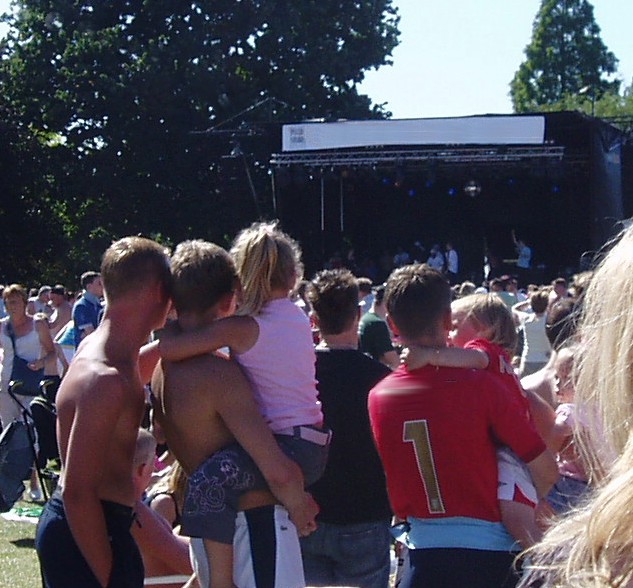
 Above: despite the risk of appearing to be a human cliché Altenisio would put on his Brazil shirt and play football in the warehouse car park.