Saturday, and the usual Saturday lunch, the usual afternoon spent in an armchair reading the newspaper. In the early evening I drove northwards through the dark night, joining the Great North Road and continuing until I came to a small northern town. Parking my car, I walked along the High Street to the Crown Hotel, one of the most famous coaching inns of the Great North Road.
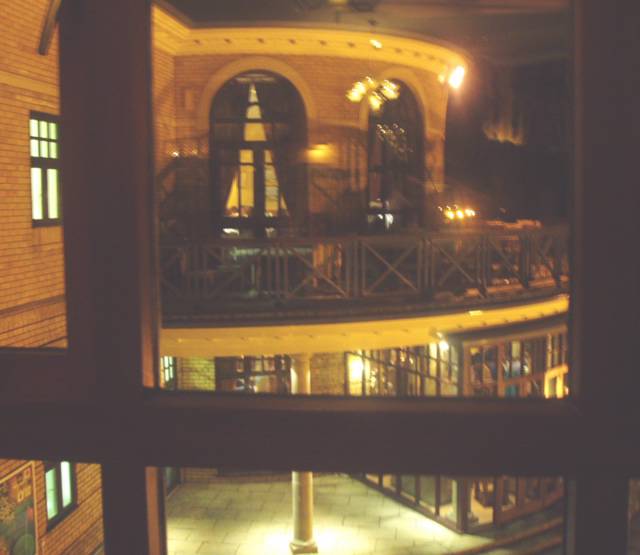
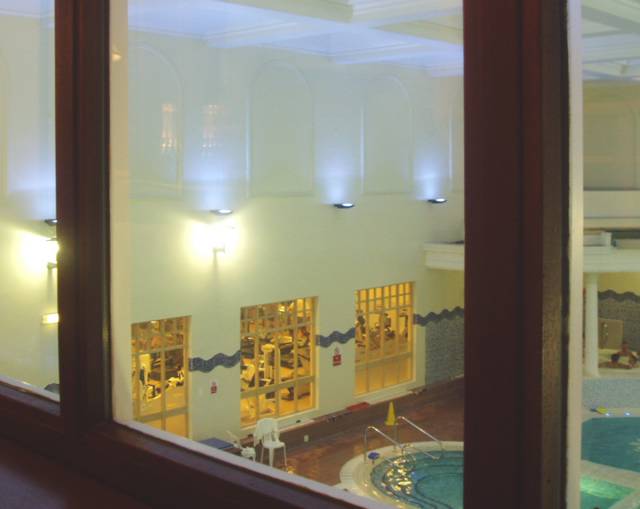
The Crown Hotel is a magnificent example of pre-Reformation architecture, with stone bay windows and mediaeval vaults. It was a favoured stopping point on the road from London to the north of England, and many kings have stayed there in the past. There is a chamber in the building where Richard III is supposed to have signed the death warrant of the Duke of Buckingham (it forms a famous scene in Shakespeare’s
Richard III).
In one of the hotel sitting rooms I met Marie-Astrid Wallis. She hardly seemed changed since I last saw her, although we had not met for several years. A little slimmer than before, her hair was still blonde, her eyes still an implausible shade of blue. She was dressed in dark red, a thick overcoat folded on the seat by her side. As she got up to greet me I kissed her in a formal sort of way, but I detected a slight drawing away, as if even conventional intimacy was to be avoided.
I had met Marie-Astrid at university where we had several mutual friends and had eventually become friends ourselves. She came from a very religious background, but at college she had more or less put all that on one side and lived as an ordinary student. Since her return home however, and her subsequent marriage, the religious side of her life had prevailed, and she had effectively “disappeared”.
Therefore I had been very surprised when she had contacted me and suggested a meeting.
We had tea on a sofa in the middle of the chintzy room (the chintz was rather overwhelming, so that I felt almost suffocated by the soft furnishings). She told me all her news since her marriage (which I had not gone to), the birth of her daughter two years ago, and her new job with a charitable foundation that helps single mothers who have young children. It was her job that had led to her moving from London to the small northern town.
The hotel sitting room was rather overheated, and as it was still quite early we decided to go for a walk before dinner. Outside the sharp air was very refreshing, and we made a circuit of the streets in the town centre, along a back street to the main square, past statues of various local worthies, past the Town Hall, past the Museum with its political exhibits from the 1980s.
On impulse we decided to try the new restaurant
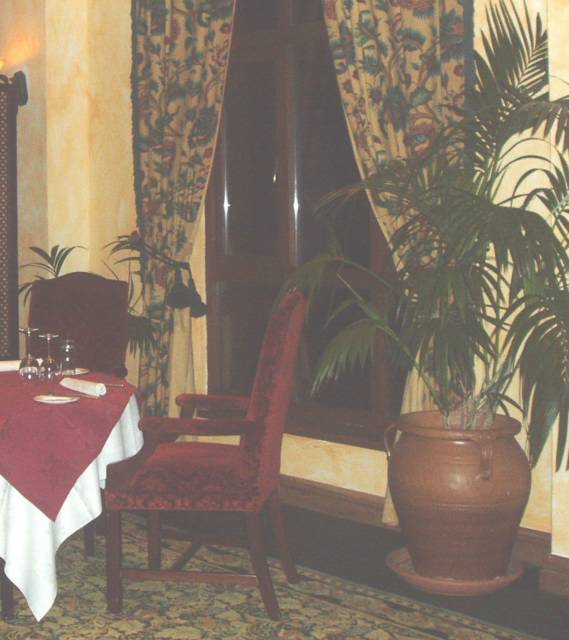
The Quayside on the opposite side of the road from the Museum. Because it had recently opened it had not yet been "discovered" and so we were able to get a table without booking. Inside it was a little stark, having high rooms that magnified the noise from the chattering diners. Everything was painted white. The staff were all French, which seemed unusual in such a provincial town.
Salmon pancake followed by grilled chicken followed by green tea brulee ("our own recipe'" the waitress told me, her beautiful French accent marred by an acquired flat Midlands intonation). Marie-Astrid announced she was a vegetarian, something I had not previously known. Our conversation was very eclectic. Being half-Danish, Marie-Astrid talked of Denmark, describing it so effectively, and with such enthusiasm, that I wanted to go there. She also talked of east Africa where she had been born (her parents had been missionaries at an American mission).
Her capricious conversational style, and her pretty appearance, belied a serious aspect, for Marie-Astrid is, at heart, a very serious person. She certainly took her job very seriously, and had become genuinely interested in child poverty. We discussed the book
Angela's Ashes (a controversial account of a Dublin childhood) which she had recently read. She also told me about her religion, which seemed to be a fusion of Baptist doctrine with ultra-orthodox Jewish observances.
After dinner we went for another walk around the centre of the little town. Our previous excursion had been just after the shops had closed, and the town had given the impression of being completely deserted. Now it was past ten o'clock lots of bars had opened, guarded by security staff (physically large and bulky, mostly bald or shaven-headed, looming over the pavements in a menacing way and looking suspiciously at the passers-by – there was a big army base located nearby, and the town had a reputation for rowdiness on Saturday nights).
All around the town centre there were many groups of young women walking about in raucous clusters. These young girls were wearing tight, bright clothes, and hardly any of them had on coats, so that they must have been cold in the night air. They also seemed to have a strangely glossy appearance - long glossy hair, glossy lips, glitter on their eyelids. There seemed to be no end of these young women, clomping around in impractical shoes, carrying on jolly conversations at the tops of their voices.
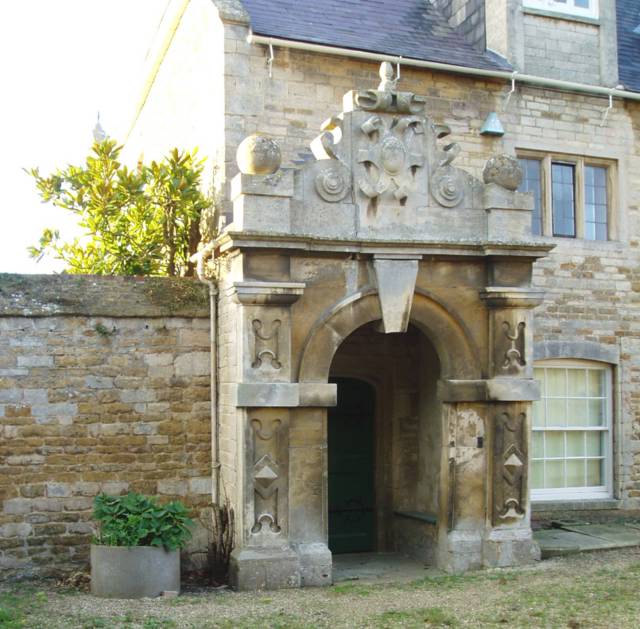
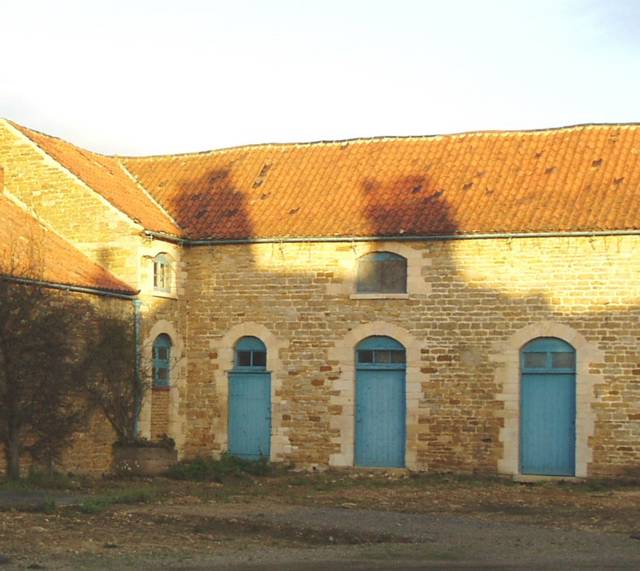
Marie-Astrid invited me to see her new home and we drove, each in our own car, to a nearby village. She lived in the back half of the Old Manor House, a very solid-looking Georgian mansion that had been split into smaller units. We parked our cars in the road and went through a courtyard surrounded by outhouses, entering the house through a large kitchen. Inside the rooms were big and spacious, with an empty appearance as most of Marie-Astrid's furniture was still at her house in London. She introduced me to her sister-in-law who was staying over the weekend.
This sister-in-law seemed to take a dislike to me and pointedly ignored everything I said. She went into the kitchen and made me a horrible cup of tea (weak and almost cold, as if the water hadn’t been boiled). The thought crossed my mind whether she was mistakenly regarding me as some kind of rival to her brother (who was out at a “Sabbath” function – observation of the Sabbath being one of the key tenets of the fundamentalist protestant sect to which they all belonged).
Marie-Astrid showed me round the house. Toys belonging to her daughter were scattered about most of the rooms. On the wall in the living room was an embroidered sampler, a family heirloom. French windows led onto a terrace but it was too dark to see much of the garden.
We chatted for a little while, and I told her about the Nixon wedding in two weeks’ time (I am to be Best Man). After about half an hour I left them, and began the long drive back to Buckinghamshire. Arriving home the sky was very clear, and above the house the stars seemed enormous - Orion, the Plough, and the "W" of Cassiopeia.
It had been a strange evening.