I had some time off last week as it was my birthday on Wednesday, and also we were having a new bathroom installed. The bathroom installation meant I had to be at home during the day, but I managed to see some friends in the evening. The week divided into three themes.
PeopleMarie-Astrid asked me what I would like for my birthday. I told her I wanted to meet some new people. So on Monday evening I went to The Gap Inn, a pub in the middle of nowhere, where she had arranged a get-together of various people she knew.
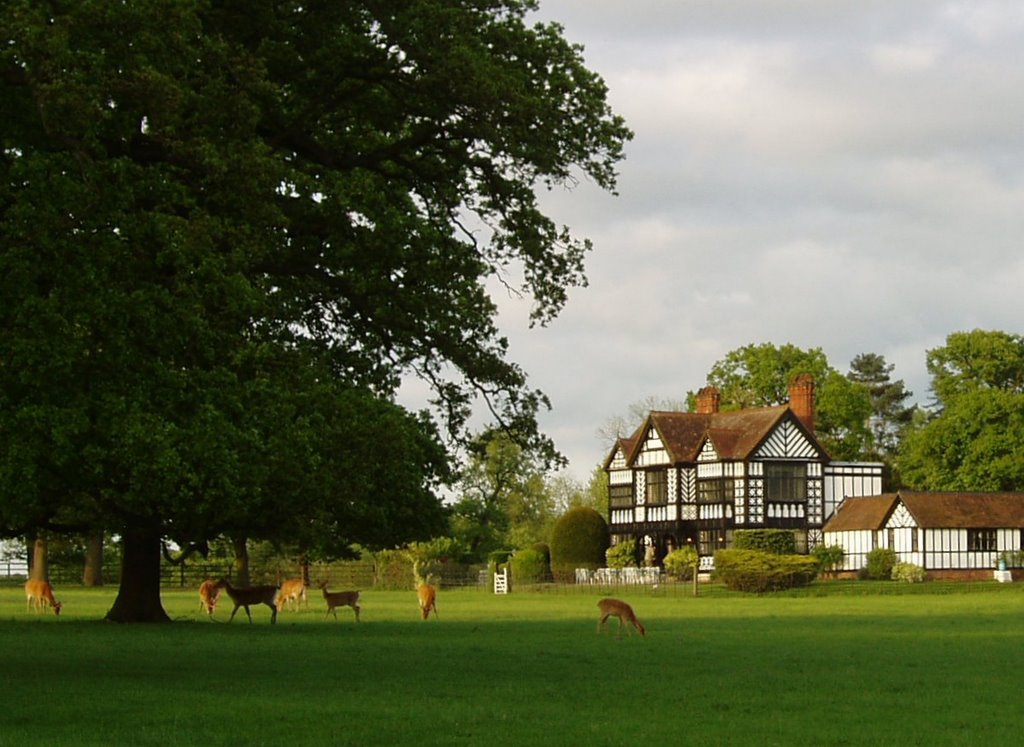
The Gap Inn is part of the Brewer’s Fayre chain, a budget “family” establishment (Marie-Astrid thinks it immoral to spend more than about thirty pounds on a meal). After driving for miles I eventually found the place. At first it looked like an ordinary roadside pub, circa 1900, on a t-junction hemmed in by trees. Turning into the car park I saw that the original building had been extended many times over in what could be described as
PVCu-Joseph-Paxton – a design of multi-level conservatory halls. Inside was a big open-plan bar area with seating arranged round low tables. As soon as I walked through the door I was called over to a group who somehow knew who I was. Shortly afterwards Marie-Astrid arrived, and then Emily (who arrived in a long dress, expecting the restaurant to be a lot smarter). We went through the main restaurant area, which was crowded with families, and round a corner and up a few steps to a quieter level where a long table had been arranged. The seating was on one long banquette (one side of the table) or wobbly chairs.
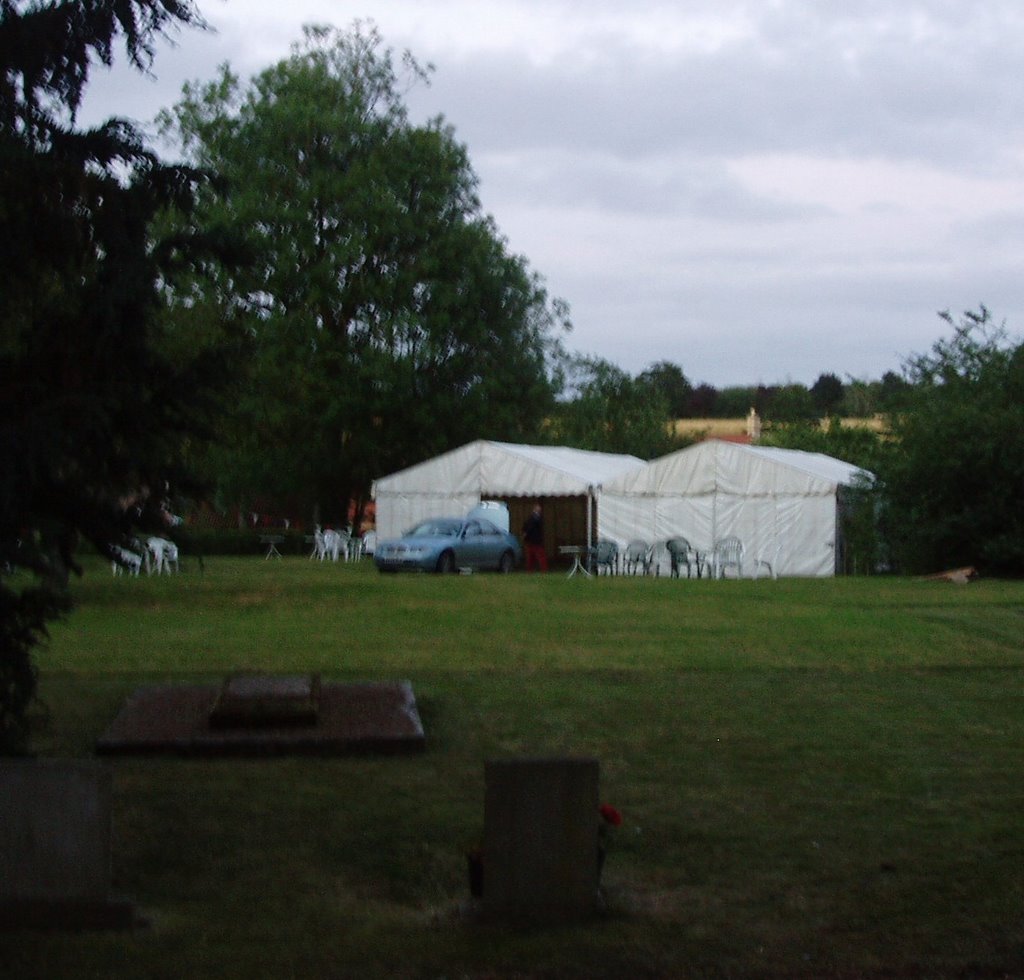
Garlic bread, a steak (a bit dry and tough) with chips and salad, and a sort of chocolate cherry cake with lots of synthetic cream. Water to drink, with a cup of coffee to follow. Afterwards we had drinks (real alcoholic drinks) out in the garden which was just a big area of grass dotted with trestle tables, a climbing frame and kiddies slide to one side.
The people (twelve in number) Marie-Astrid had assembled were very disparate, and included some eccentrics. There were people from her church (severe Baptists), people from her work (public sector), and tenuously-connected Scandinavian relations who happened to be in the United Kingdom. During the evening I managed to talk to all of them, theoetically extending my circle of friends (though who knows whether I will ever meet any of them again – Marie-Astrid seems to operate a slash-and-burn policy when it comes to marginal acquaintances).
Films Paul Waddingham asked me what I wanted for my birthday. I told him I wanted to see a film – something new. We went to see
The Wind That Shakes The Barley, an anti-imperialist film by Director Ken Loach which won the Palme d’Or at Cannes this year (reviewed on BBC 2 by Newsnight presenter Kirsty Wark who broadcast direct from a roof-garden at the festival wearing evening clothes that implied the dress code of Lord Reith had been reinstated).
The film is set in southern Ireland in the years immediately after the First World War. It follows the career of a student doctor who joins a group of insurgents after observing a sequence of repressive measures carried out with disproportionate force by military forces upon the local population. The group of insurgents witness atrocities carried out by the military. They carry out atrocities themselves (on the military and on “informers” in the local population). They split into factions and carry out atrocities on each other. The film ends with the student doctor being executed by the regime he had helped to bring into power.
After the film we had dinner at Café Rouge at the Hays Wharf Galleria. Hays Wharf is the river frontage (south side) that runs between Tower Bridge and London Bridge. The Galleria is a shopping mall inside the old Hays Wharf offices and warehouses (1850 stock brick edifices). Café Rouge is a chain of fake French cafés with a menu of classic gallic dishes. We sat at one of the outside tables, a low fence seperating us from the passing evening strollers. Crêpe D'Eglefin (pancake filled with haddock), followed by Boeuf Bourguignon, followed by Crème Brûlée. House white wine to drink during the meal with several coffees to finish. The food was very good (“obviously mass-produced and reheated in a microwave” said Paul Waddingham). The waitresses were young and pretty (eastern Europeans), smiling every time they came over to our table.
Paul Waddingham couldn’t stop talking about the film. He loved it. He is a true radical, not caring whether things are left-wing or right-wing (it is the process of politics that he finds so absorbing).
“Ken Loach is being very subversive with this film” he said. “It is obviously about the Iraq war, every single frame. But if he had made a straightforward drama set in downtown Baghdad, it would have sunk without trace, especially in America. Dressing it up as the Irish war of independence is a master-stroke. Americans will go to see it since they over-romanticise the Irish troubles. The left in Britain will go to see it since they empathise with anti-imperialism. And all the time Ken Loach is getting his anti-war propaganda across. He’s especially clever by portraying the freedom fighters as white catholics instead of brown muslims - so people don’t automatically discount their experiences because they’re not Europeans. The guy’s a genius.”
 Above: inside the Hays Wharf Galleria. Cafe Rouge is off to the right (we sat at a table out on the main plaza).Places
 Gary Spencer asked me what I would like for my birthday. I told him I would like to see a part of London I’ve not visited before. He booked us a table in the dining room at the Ritz Hotel (I’ve been in the hotel several times, but I’ve never had a meal there).
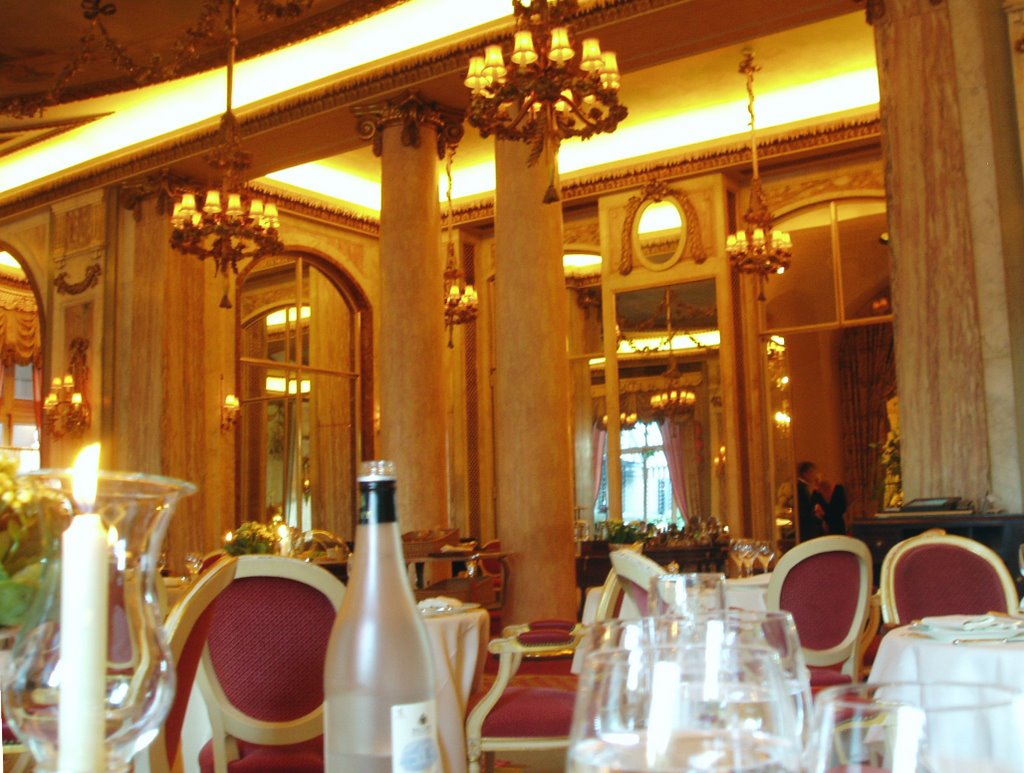
The hotel opened in 1906 and has been visited by a bewildering number of famous people over the years. The dining room at the Ritz is one of the most ornate interiors in the country, designed in a Louis XVI style by the partnership Mewes and Davis (who also designed the interiors at Luton Hoo). The most stiking feature of the room is the way in which the magnificent chandeliers are linked by garlands of gilt-bronze flowers.
Our table was near the window, looking out over the Italian Garden and into Green Park. I told Gary Spencer that since he was paying the bill I would have the same courses he ordered (he never believes me when I tell him I am indifferent to fine cuisine). We started with pan-fried pate foi-gras, Gary ordering a half-bottle of sauternes at an incredible price of £89 (it was Chateau Rieussec
http://www.wine-journal.com/rieussec.html). Then a dish that seemed to be mashed parsnips and poached quails eggs with a half-bottle of Sancerre, followed by duck (Canard a’la Rouennaise) with two big glasses of a red Chilian wine, followed by Amedei chocolate fondant and praline ice cream with sauternes again. We had our coffee in the Long Gallery. Inbetween these courses the waiters brought us little extra dishes, unsolicited. The food at The Ritz is described as “informal palace quality”. Although each course was very good in itself, the combination of so much rich food made me slightly nauseous by the end of the meal. The bill, with tips, came to well over £300.
Gary Spencer talked a lot about immigration (a subject everyone seems to be talking about).
“You’re right” he said, “Blair has turned this country into Orwell’s Airstrip One” (I don’t remember ever saying that, but I let it go). “Instead of being a distinct nation, we are an economic sub-unit of the state of Oceania, a club of economic stakeholders, citizenship being decided by whether you can contribute to the economy or not. The bottom ten per cent of the population is going to be pushed to one side and replaced by five million keen young eastern Europeans. Employers are delighted by this, since they don’t have to bother with demotivated unskilled workers or high levels of absenteeism. The Labour Party is delighted since they think there is going to be a repeat of the sixties and seventies when they organised immigrants into bloc votes and shouted Racist at anyone who said they were gerrymandering. But I tell you this time round they’ll get a shock since the Polish bloc vote is more likely to go to the Conservatives, if they play their cards right.”
“What will happen to the bottom ten per cent who are being pushed to one side?”
“Who knows. But there isn’t an infinite amount of money for social services, medical care, education. As soon as all these Poles and Lithuanians start having families the pressure for resources is going to intensify - and there’s no way taxes will go up to close the gap.”
We went out into the night air. Gary seemed to be very drunk (he had probably drunk two glasses for my every one). We walked down St James’s, Gary making loud comments about the appearance of various women we passed. Eventually we came out onto The Mall and walked up towards Admiralty Arch (I said I wanted to see John Prescott’s grace and favour residence). Gary was staggering as he walked and instead of talking normally he was almost shouting. I warned him that there was probably more police surveillance along The Mall than any other place in Europe.
We arrived at Admiralty Arch and Gary Spencer said he had to “go” urgently. Oblivious of his surroundings he urinated against the Portland Stone. Cars drove past in The Mall.
“You realise you could be arrested for being drunk and disorderly” I warned him.
“It’s a dirty protest against John Prescott” he said.
 Above: the Ritz Hotel in Piccadilly was designed by Mewes and Davis and opened in 1906.
 Above: inside the dining room at The Ritz (not a very good photo).