Sunday, March 26, 2006

Les Amants Reguliers at the Cine Lumiere


Recently I went to the Cine Lumiere in Knightsbridge to see Les Amants Reguliers. Because no-one I know is interested in French cinema I ended up going on my own. The Cine Lumiere is in the French Institute, just off Cromwell Road.

Les Amants Reguliers stars Louis Garrel (son of the director of the film Phillipe Garrel) and Clotilde Hesme. It is set in 1968 and follows a group of Parisian students as they riot, take drugs, indulge in free love. The sense of time and place is conveyed very effectively, particularly as the film has been made in black and white (lots of stark images, clever compositions, modulated textures). Although it was a serious (even ponderous) study, there was quite a lot of humour. It examined many aspects of the French character (the student-poet who evades the police by taking refuge in the apartment of his father's mistress; the dour magistrate who believes all poets should be put in gaol as a matter of course; the students who never seem to do any work and exist in a world where everything they need is handed to them). At three hours, I thought the film was too long (or was that meant to convey the sense of ennui the students were obviously suffering from?).

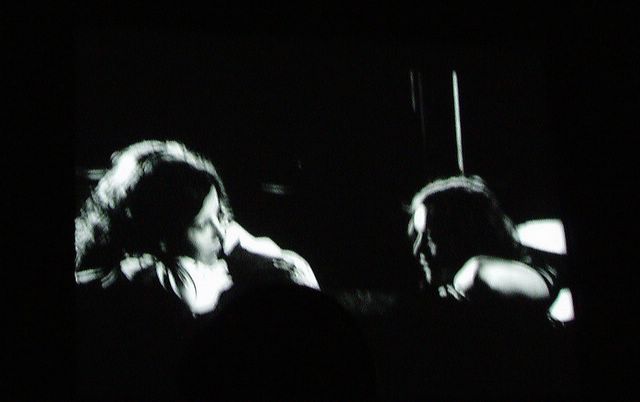
In an example of Jungian synchronicity, I was in the cinema watching a film about rioting French students, while at the same time in Paris real students had begun rioting.

Above: photo of a news broadcast on the second day of the Paris riots. Apologies for showing the Fox News logo - this is not meant as any endorsement of Rupert Murdoch. As a current affairs channel Fox News displays very poor journalistic standards and I sometimes watch the station to see just how many facts they can get wrong.

Thursday, March 23, 2006

Gordon Brown on the Today Programme this morning

The Chancellor, Gordon Brown, was on the Today Programme this morning in the prestige ten-past-eight interview slot. The interview was interesting as revealing the media style of the (possible) next Prime Minister. I was so interested in the way he was speaking that I only heard half of what he said.

Gordon Brown was very skilful at answering the questions within his competency as Chancellor. On broader issues his style changed and became a strange mixture of hesitancy and agitation (repeating words twice in quick succession, inserting "er" frequently, struggling to get words out of his mouth). When asked about the Iraq war his reply was clumsily evasive and he just referred the interviewer to speeches he had given on the subject.

He was obviously uncomfortable about misleading people (which we all knew he was doing). On a human level this was a very likeable quality. As a professional politician he is going to have to learn to lie with confidence.

Wednesday, March 22, 2006

An unsettling quality to the atmosphere

Torrential rain fell from a brown-grey sky. Impromptu streams formed themselves inthe middle of the roads, making driving difficult. It was very cold.

I have often had the experience, in my researches, of penetrating into ever more remote areas of the county, only to find even more obscure communities that lie beyond. Just as you think you know a region, it surprises you with yet another aspect that appears, as if from nowhere.

Such a district is the south-easternmost part of the escarpment (the hills peter out, but unexpectedly appear again, at a lower level, hidden by trees). This group of wooded hills is crossed by a confusing cats cradle of lanes between two market towns. There is an unsettling quality to the atmosphere in this locality, almost a creepiness - not entirely unpleasant, but there are places you would not want to stay after night has fallen. An example being the village I went to last Sunday.

It comprised a tiny estate around an Edwardian hall, the village all of a piece architecturally. The village was at the base of a small valley, with a sluggish and meandering river going through it. Steep slopes to the sides of the valley, very green fields, hedgerows bordering the lanes with oak trees dotted along them (the trees so swathed in ivy they appear to be choking). There were a few large farmhouses, and a short street of cottages, all built in a picturesque style (knapped flints, redbrick quoins, high gables). The cottages were physically small, but had a grandiose appearance, as if they were miniature mansions - the rooms inside these cottages must be miniscule(the picturesque life was always uncomfortable). Out in the fields, placed strategically for theatrical effect, were isolated cottages, now ruined and tumbledown, sheep looking inquisitively out of the gaping holes where the front doors would have been.

Crossing the river over a small humped-back bridge, I entered a world that was cold, damp and beautiful. There was an extremely sharp bend to the road, and then the little village street with the main entrance to the hall at the end (the hall was a jewel of Edwardian architecture - an expansive, self-satisfied sort of building, built for a banker in 1905 and allowed to run-down in recent years following the death of a young heir in a car crash). To one side of the hall gates was the church, high on a bank, with a round tower and heavy buttresses supporting thewalls.

I got the key to the church from a nearby bungalow, standing in the rain while the elderly lady searched for it, then continuing to stand in the rain while she chatted about the village (I was right about thehouses being damp - the closeness of the river and the canopy of trees create a densely moist environment). The grass was very spongy in the rain, and the path up to the church porch was slippery. The lock was stiff, and I struggled for a while with the ancient key.

Eventually the key turned and I pushed open the heavy door. Immediately inside the door it was dark, and the darkness became intense after the door swung shut behind me. Moving forward, I entered the main body of the church where a brownish light came through the windows from the wet afternoon sky. The rain thundered down on the roof.

The interior was basically one large room divided into a nave and a chancel. The furnishings were sumptuous Victorian, with brass chandeliers suspended over the chancel like golden crowns (looking up at them through the murky light I saw that they held candles, so yet another building in the twenty-first century lit by candlelight). Some indifferent medieval wall paintings, preserved more for their great antiquity rather than any artistic merit.

I had walked about halfway down the length of the church, when my intuition told me, insistently: something is behind you . Looking round I saw the upper half of the west end was filled by a gallery, and on this gallery I could see dazzlingPre-Raphaelite figures (highly coloured with golden halos). In the gloom I thought for a moment (an unpleasant moment) the figures were alive, until rationality gained control andI could see that they were painted on a huge elaborate cabinet, of immense proportions, containing the church organ.

Returning the key to the bungalow I again stood in the rain (not so heavy) while the old lady talked about the village. The parish had been dominated for over a century by a dynasty of Rectors who passed the Living down, father to son, in a sort of ecclesiastical monarchy. The organ was one of the treasures of the area, and had been brought to the church during the Second World War when the village it was previously located in had been taken over by the military. There had been a long feud between the Rectors of the church and the lords of the manor, and one of the more irascible occupants of the Hall had been buried just inside the church door so that everyone entering the building stepped on his grave. I jotted down all her stories into my notebook, the falling spots of rain making the ink run. Just as I was leaving I asked her about a reference I had read in an obscure local history that the parish had once had two medieval churches, and that the ruins of the other church could still be seen.

"Ah, but it's no longer in ruins" she said mysteriously. "It's been restored in the last few years. The restoration has been a labour of love by one man. It's up on the ridge by the old bridlepath. It's not easy to find. You can't drive there, you'll have to park up at the field gate and walk."

I wrote down her directions and a rough map so that I could find the way if I ever returned to the village.

Tuesday, March 21, 2006

Virus

My PC at home has become infected with a virus. Not sure how long it will take me to fix it (I'm not very technically minded). Can't post photos, and text posts are likely to be limited for the time being.

Friday, March 17, 2006

So many details that can (and do) go wrong

Another horrible afternoon - the campaigns are going well, but there are so many details that can (and do) go wrong that it is very stressful. Added to this is the fact that I have to do everything myself, with no-one to help (check things, check things again, check things a third time because the artwork still hasn't been done right). One of the other marketing staff in the office (aged 28, approximately resembles X-Factor Shayne Ward, whistles and sings all day) was helpful with strategic phone numbers and suggestions but I felt so angry with the general situation that I must have seemed off-hand and rude (recently I have started to get angry when things go wrong, which is not my usual response).

Wednesday, March 15, 2006

Horrible day


Horrible day at work - actually horrible afternoon as I was off in the morning.

Sunday, March 12, 2006

Historical connections previously unsuspected


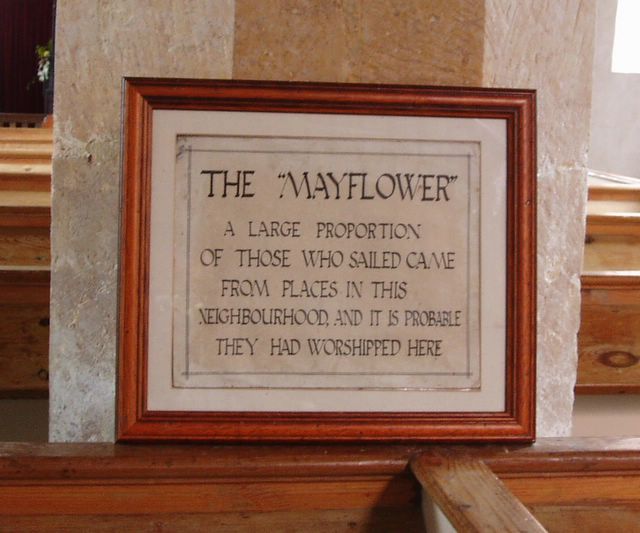
Very often as I visit variously remote villages I come across historical connections previously unsuspected. For instance this sign propped up against a pillar in a remote country church. Hand written, possibly recording a tradition handed down through the generations, vulnerable to being thrown out or stolen (and so the historical anecdote would be lost).

Saturday, March 11, 2006

"Let them eat cake" I thought to myself


With Helen B and Kim Blacha to the Wallace Collection in Manchester Square. This is one of London's least known museums, despite being in the heart of the West End. We went there to see an exhibition on the furniture of Marie-Antoinette, then in its final days (actually they went to see the exhibition, I just tagged along).

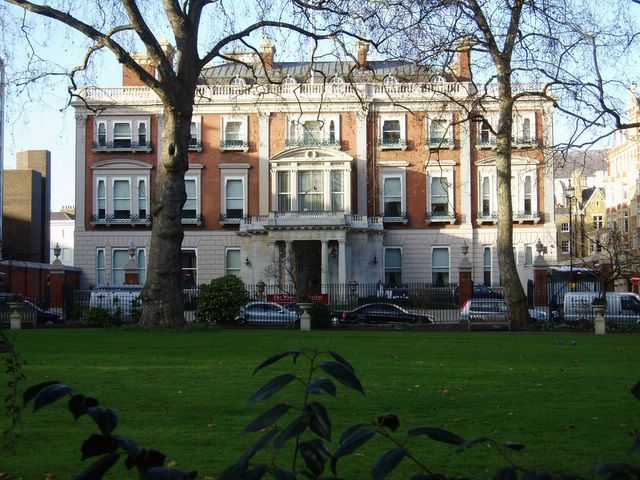
The museum building, Hertford House (above), houses an art collection put together by the 4th Marquess of Hertford (his daughter in law gave it to the nation in 1897). You go in the front entrance (admission is free) and enter an interior that is almost overpowering in terms of richness and colour. Mostly on display is French decorative art of the 18th century, with a surprising number of famous paintings (Poussin, Fragonard, Watteau etc).

During the day the place is filled with history of art students - serious and attractive young women, carefully dressed, moving slowly, gathering in groups around objects while a lecturer gushes. It's as if the Wallace Collection is a factory churning out these Art History graduates, so that you wonder how many of them will be able to use their qualification in later life. The graduates are like the objects in the Wallace Collection itself - delicate, beautiful and impractical.
The Marie-Antoinette exhibition was in such a small room that you could easily miss it. I felt like saying "Is this it?" A few items of furniture, a handful of decorative objects, interpretive panels of photographs and text. We went round each of the items looking at them closely. Secretaires, appliques de meuble, pendules de chiminee. The impression I gained of the Louis XVI style was of an overwhelming sickliness, as if I had eaten an entire box of dark chocolates while listening to the songs of Paul McCartney.

When Helen and Kim had finished looking round the exhibition we went downstairs to the Cafe Bagatelle which was in the old museum courtyard, now roofed over with glass. This must be the most rarefied cafe in London. In a design by Rick Mather, Victorian and contemporary sculptures have been scattered around the wide court, mixed with balustrades, fountains and potted palms. The muted colour scheme contrasts with the excessively decorative and gilded gallery exhibits that can be glimpsed through the windows overlooking the court. We sat on wicker armchairs at tables covered in white cloths. The hush and reverence of the cafe contrasted with the livelier atmosphere in the museum itself (surely it should have been the other way round?).

The service was very very slow.

We ordered tea, and Helen and Kim had slices of gateau ("Let them eat cake" I thought to myself). The cult of Marie-Antoinette has never particularly interested me, although I will try to see the film Marie Antoinette by Sofia Coppola (released this autumn). I was left out of the specialised discussion Helen and Kim had about the exhibition, and idled my time away.

Later, on the way to the cinema, we talked about Versailles and the escapist Hameau built in the grounds where the ghost of Marie Antoinette was supposedly seen about a century ago by two women (who wrote a best selling book on the subject). Kim Blacha described the music video Nothing Compares To You by Sinead O'Connor which was filmed at Versailles and has a haunting quality (although in the video, wearing black, Sinead O'Connor resembles Nosferatu rather than Marie Antoinette).


Above: The Marie-Antoinette style comes back into fashion every twenty years or so. The 2006 film Marie-Antoinette, directed by Sofia Coppola, was based on the biography by Lady Antonia Fraser. The 1938 film Marie-Antoinette, starring Norma Shearer and Tyrone Power, was based on the biography by Stefan Zweig (one of Robert Leiper’s favourite authors).

Wednesday, March 08, 2006

Today has poured with rain


After weeks of dry cold drought today has poured with rain. In New Oxford Street is this umbrella shop which is interesting because it has remained unchanged (inside and out) for a hundred and forty years. They claim to have sold umbrellas to Gladstone, Bonar Law (only Prime Minister born outside the United Kingdom) and Lord Curzon.

Sunday, March 05, 2006

Recumbent effigies in the south aisle


Through modern wrought iron gates, across the wide shallow moat and along the gravel drive which curved slightly. The island enclosed by the moat is quite large, comprising some four or five acres, mostly wooded gardens. The moat was first constructed in prehistoric times by our brythonic ancestors (in an archaeological excavation about sixty years ago the skeletons of two men, buried in sawdust, with mosaic rings on their arms, were found). DNA tests in isolated communities show that the genetic descendants of the brythons are still among us. The Roman's built a villa within the moat, and in the subsequent two thousand years the residence has been rebuilt and rebuilt until its present manifestation - plain Regency of 1812, faced in stucco and painted cream. A venerable cedar tree obscured with a verdant veil my first view of the house.

In front of the house the moat widens into a lake, and because the building is so close to the water's edge you had to walk right across the front and down a slope before you could look back and get a complete view of the main facade. Rising three floors, the top storey had an open loggia with a rooftop terrace behind (Pevsner says this arrangement was put in after a fire destroyed the attic rooms in the 1950s - a familiar fate of country houses lit by candles). There is a legend that inside the house is a secret hiding place next to one of the fireplaces, and that a recusant priest taking refuge in this hole suffocated with the heat and smoke, his skeleton being found years afterwards.

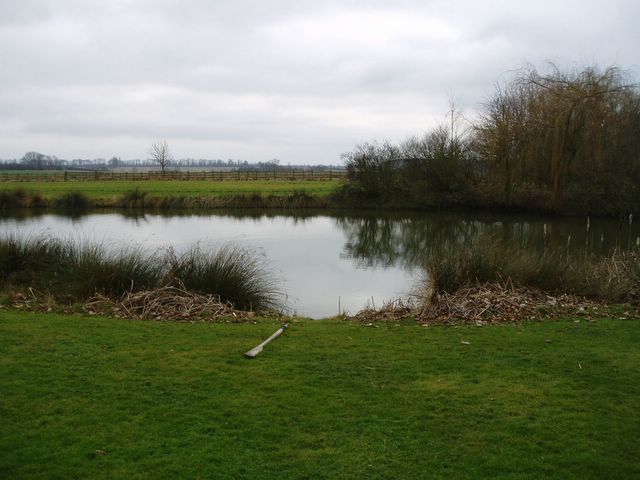
At some point a landscape gardener had widened the moat in front of the house so that it became an ornamental lake. In the subdued light of a late February afternoon the water looked as mysterious as Dozmary Pool. A discarded oar, looking forlorn, acted as a reminder of summer boating sessions.

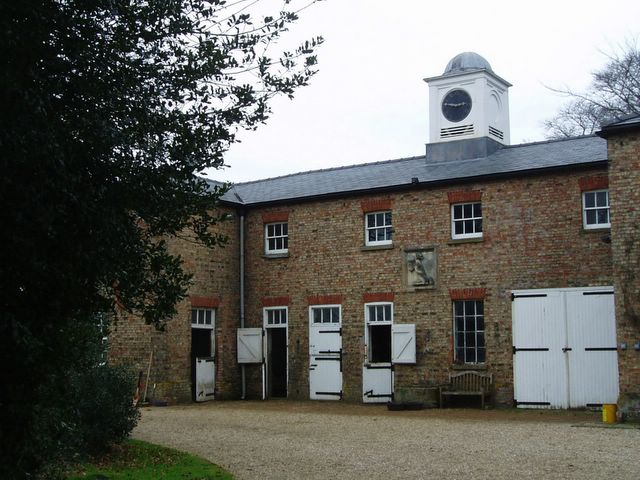
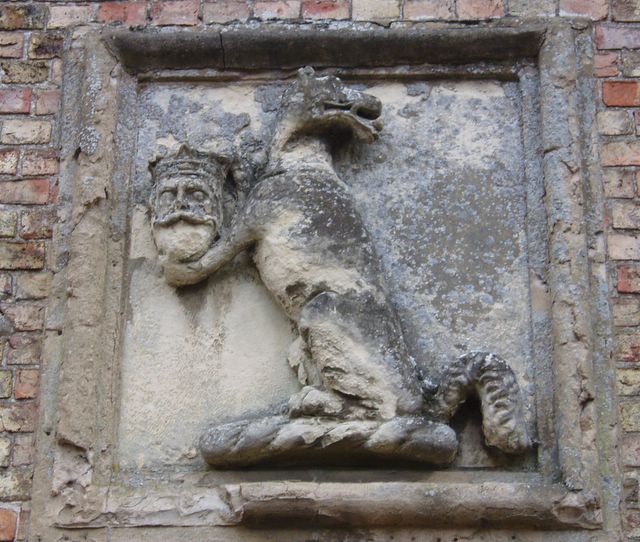
To the side of the house were the stables, in substantial Victorian brick. The main house had a small coat of arms on the front facade (just below the loggia) but the stables had a massive crest on the front, denoting the pride felt in the horseflesh within. In an echo of Rupert Brooke the stable clock said ten to three.

A crest is not the same as a coat of arms. Arms (which are regulated by the College of Arms in London) are worn on a shield, whereas a crest is a device worn on the top of a knight's helmet. This crest features a regardant lion (ie looking backwards) holding a crowned head (a decapitated foe whose head was thrown to wild beasts?).

Looking into the Tackroom you could see saddle pads, saddles, bridles, whips (stood up in a traffic cone), feed supplements, cleaning materials.

Horseshoes on a stable window sill, all carefully pointing the right way (lest the luck should run out). Horseshoes are regarded as lucky because they are made of iron, which is supposed to repel evil. They also have seven nail holes, which is a lucky number.

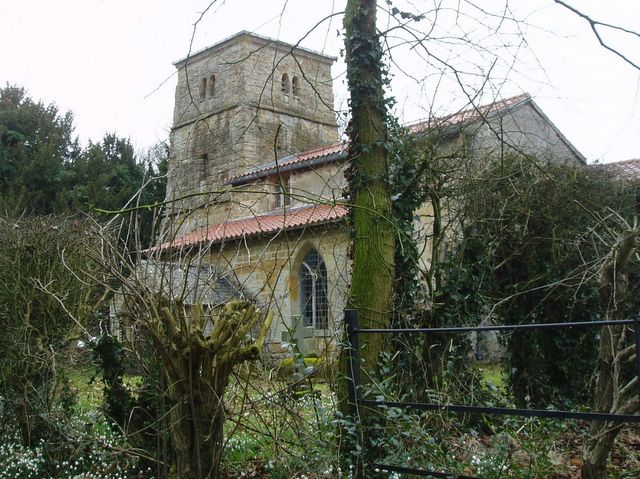
Across the lane was the church, built of ironstone, a Saxon foundation but rebuilt over the ages.

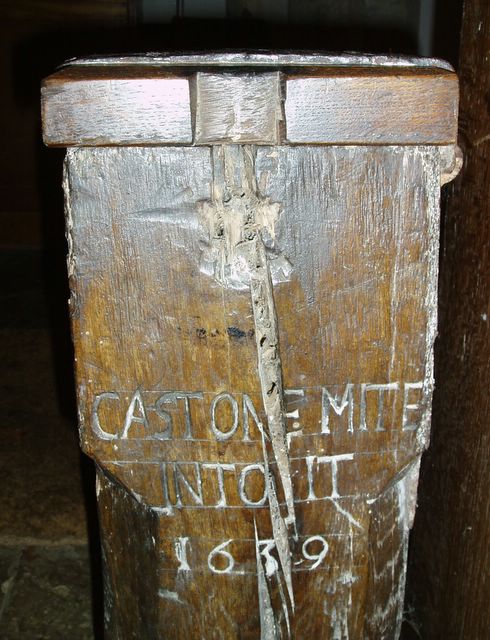
The Poor Box was carved from a single slab of wood, with the date 1639, and the inscription: This is God's Treasury cast one mite into it (was this a reference to the widow who cast one mite, her entire wealth, into the Temple treasury?).

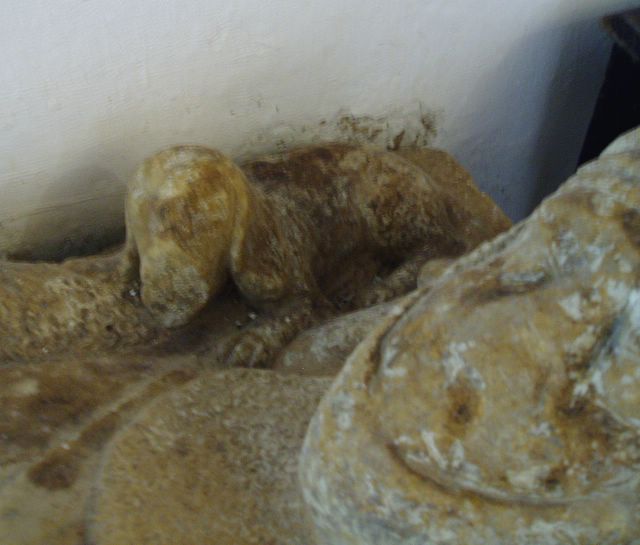
Recumbent effigies in the south aisle. Two stone knights (and another one in the chancel). Obviously knights are mounted on horseback, so horses must have been kept at the hall since at least the middle ages.

Effigies of knights usually show the feet resting on a dog or a lion, but one of these effigies showed puppies either side of the head. It's a poor photograph, but you can make out the worn shape of a puppy. He was a man who liked dogs!

Outside the church the countryside fell away in gentle slopes.

Saturday, March 04, 2006

Brand awareness 3


Sometimes marketing can lose its way and become too clever and sophisticated. This farm shop has got the marketing exactly right. Situated on a busy road they have put out homemade signs that simply tell the truth (the most effective kind of marketing!). The hens are happy, the potatos are local and the shop is open. Everything about the place tells you it is authentic (the sight, the sound, the smell). As a shopping experience this is hard to beat.

Thursday, March 02, 2006

Brand awareness 2


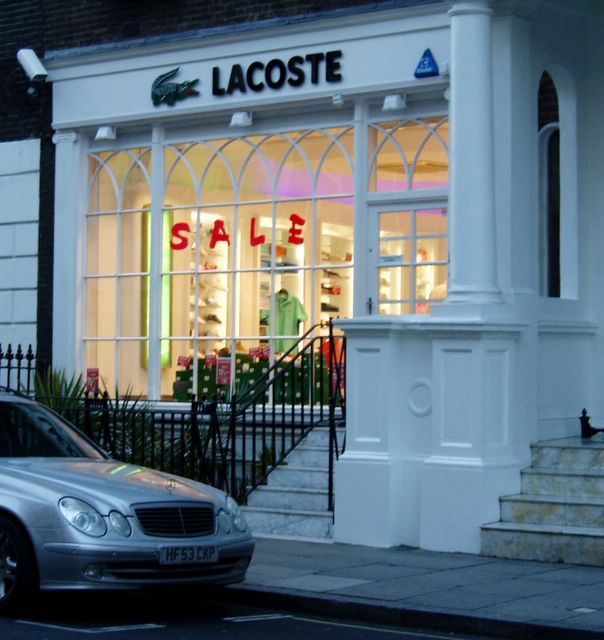
Lacoste is a very sophisticated brand, with lots of messages packed into what are essentially very simple products. The company was founded in 1933 by Rene Lacoste, a famous French tennis player. His wife and daughter were famous golf players. The family promoted the chemise Lacoste, a polo shirt, and this item of clothing was purchased by huge numbers of people who wanted to be associated with the Lacoste style (elegance of movement, effortless success, wholesome attractiveness). It is a marketing technique that relies upon very deep-seated human beliefs. Sir James Frazer, writing in The Golden Bough, said that ancient priests and warriors would wear the skins of animals (lions, bears, tigers) in the belief that they would acquire the attributes of the creatures they were impersonating (in some societies such as the Aztecs, captured warriors would be flayed and their skins worn so that their courage would be transferred to the wearer).

The chemise Lacoste was one of the defining products of the 1980s, and in recent years this cult image has experienced a revival. Recently they announced a celebrity endorsement deal with Andy Roddick, rising British tennis star. This indicates they are re-positioning the brand as an up and coming contender (rather than the established old-timer it actually is).

Wednesday, March 01, 2006

Brand awareness 1


Deans Shortbread fingers. On a shelf in Tescos the packaging looked distinctive from the other biscuits on offer. The price was more expensive than Tescos shortbread (in jaunty Stewart tartan packets). I like to try anything that's new, so I bought some of the Deans shortbread. Now I am addicted, and have these biscuits with my morning cup of tea. Even at the risk of being late for work.

Saturday, February 25, 2006

Antediluvian in the way in which he characterised a past era


Emerging from Westminster tube station, about seven o'clock, I saw the Houses of Parliament screened off by a fine grill (presumably to prevent the throwing of missiles) so that the gothic edifice seemed more distant and intimidating than ever. Hardly anyone was about, except for groups of police at various points. Paul Waddingham walked a couple of steps ahead, concerned that we would be late.

I know Paul Waddingham through Alan Nixon (they are brothers-in-law). He is short, with curly hair, pale blue eyes (the eyes of a fanatic). He is very very serious and his interests centre upon politics, economics, current affairs.

Politically he describes himself as a Tofflerist Liberal, although he could probably find a home in any of the major political parties. I was accompanying him to a meeting to be addressed by a former Cabinet Minister. When he had suggested the trip some weeks ago it had seemed a good idea. On a cold evening after a long day at work I wished I had said no. Around Parliament Square, we were soon swallowed up into the network of small streets and alleys that characterise the area away from the ceremonial thoroughfares. Several times we got lost in dead-end streets and had to retrace our steps.

Eventually we arrived at a pub, a typical London tavern, jolly and lit-up in the otherwise dark and cold surroundings. Paul Waddingham paused, unsure where to go next. Two men, dressed in long dark coats (the kind favoured by city professionals) noticed his hesitation.

"Are you looking for the meeting?" one of them asked. Paul nodded. "Upstairs and to the right" the man told him.

We went into a side door and up rickety stairs to the first floor. On a small landing stood a mature-looking young woman, in sober sensible clothes, appraising us with a level gaze. She was a door-keeper (both in professional terms and, tonight, literally minding the door).

"You can go in if you can find room" she said.

Following Paul, I went through a doorway into the upper room of the pub. This entailed pushing our way through the mass of people packed into what was obviously the pub’s upstairs dining room (Victorian deep red walls, cream paintwork, hand coloured prints on the walls). Most of the people looked like professionals (dark suited) in the their forties and fifties, although there were many who were older and about twenty or so who looked like teenagers. Men outnumbered women by about two to one. There were very few black or asian people present. Paul was shameless about the way in which he elbowed through the audience, leading the way so that we were eventually near the front, looking over several rows of chairs (every seat filled) to the top table where a very tubby man in heavy black glasses stood, holding papers, waiting expectantly (he was obviously the chairman).

We all waited expectantly, until it was half an hour after the meeting was scheduled to begin. In such a crowded room (easily a hundred people) there was nothing to do except stand motionless. A text vibrated onto my mobile - it was from Helen B asking: How is the nutter‘s rally? (she is very sceptical about Paul Waddingham and his enthusiasms).

We waited another twenty minutes, and I began to feel tired. It was at that point a frisson of expectation went through the room, and the crowd parted (only possible by crushing people into even more confined spaces) as the former Cabinet Minister moved up to the top table, the audience clapping and cheering. He was much older and shorter than I expected, bony head with little hair, glasses, frail body that seemed to be held up by his dark grey suit.

The large chairman with the black glasses said the speaker needed no introduction, then proceeded to introduce him (at some length). More clapping, and the diminutive speaker grinned around the room, antediluvian in the way in which he characterised a past era. Then he began to speak…

When the former Minister appears on Question Time, or Newsnight or the Today Programme he gives the impression of being belligerent, blinkered, hopelessly out-of-touch. This was not how he appeared when addressing the meeting. He was friendly, relaxed, and (hard to say this) charming. I had expected to be subjected to a certain amount of hectoring, but actually he was very reasoned, logical, and made his arguments step by step. Even if you disagreed with him (a blonde woman standing in front of me ostentatiously walked out, leaving her partner behind) you could understand how he had arrived at the conclusion. This was such a change from the usual “trust me I’m a politician” line that I was very impressed.

Most interesting thing he said: however incompetent western governments become, the economies of Europe and America will remain buoyant because the economic rise of China is keeping the retail price indexes in check, delivering painless low inflation.

After the meeting Paul Waddingham wanted to stay and talk to some people he knew. I felt tired from standing nearly three hours and left him to it. I got lost on the way back to the tube station.

Monday, February 20, 2006

He always was a bad loser


Saturday, and we gathered in Emily's house before going bowling - an event I had not been looking forward to. On the drive down I had harboured the faint hope that we would go to some country pub where there would be antique nine-pin alley in the corner of the bar and we could pass the time drinking ale, listening to the locals, very occasionally playing a game of traditional skittles. But as I feared, it was the energetic ten-pin variety we would be playing.

The presence of Gary Spencer meant that we would have to take it very seriously and be organised into teams and play to win. I was resigned to a noisy and fast-moving evening on top of what had already been a tiring day. As well as Gary and Carol Spencer and their four year old son, there was Emily, Julie, Marie-Astrid and her four year old daughter, and myself (whenever I questioned the desirability of bowling, I was told we had to go because the children wanted it, implying that it would ruin their evening if I didn't go along).

Emily lived in a modern chalet-style house in a suburban village location. The house was detached, but was so close to its neighbours that it might as well have been terraced. Downstairs there was a combined lounge and dining area with a kitchen to one side. The big room was furnished completely in white and cream (cream curtains, huge white sofa, white carpet - all immaculately clean). On the walls, and on shelves and ledges were examples of ethnic art (Innuit, Benin, Maori) which were trophies brought back from her annual long distance holidays. We sat on the low white sofa and chairs, round a long glass coffee table loaded with various Thai and Indian dishes (Emily and Marie-Astrid were in the kitchen, getting more food ready).

"She obviously doesn't have a dog" I said, looking at the pristine furnishings.

"She obviously doesn't have a life, there isn't a mark on anything" said Gary.

Carol gave her husband a warning look, presumably afraid Emily would hear. We sat in silence for a while, listening to Philip Glass's Metamorphosis 2, which was playing in the background. The children talked quietly to each other.

"I'm looking forward to tonight" said Gary. "I've been getting into shape recently. I've been doing two hundred sit-ups a night. I do them during Eastenders. I've booked my holiday in Gran Canaria and I'm going to sort my body out ready for it. I'm going to show the world..."

Carol Spencer looked sceptical.

After the meal we drove to the outskirts of town and the bowling arena. Big, bland and featureless on the outside. Inside it was dark split flooring leading down to the dazzling lights of the bowling aisles. Raucous noise of the bowling almost drowned the loud music (Texas Sleep, Leo Sayer and DJ Mech Thunder in my heart, Coldplay Talk). On one side of us were six people aged in their early twenties, all wearing the same white t-shirts which glowed in the fluorescent light, the two girls with blond pony-tails and white baseball caps. On the other side were four men of profound geekiness (ill-fitting clothes, metal-rim glasses, high-fives every time one of them bowled).

We split into two teams of four, and started playing. Three games had been booked, Gary saying this should take us an hour and a half. The children used a metal chute to bowl (this was surprisingly accurate). Against my expectations (and in variance with previous times I have gone bowling) I was extremely good, scoring mostly strikes and half-strikes. My team soon had a commanding lead. I could tell I had played well when Gary Spencer suggested abandoning the last game half-way through as it was "getting late" (he always was a bad loser).

Thursday, February 16, 2006

The labour necessary to keep up such a show must be immense

Saturday, and because Marie-Astrid is a Baptist of a particular sect (one that keeps the Sabbath on a Saturday) there is a limited number of things she can do. One permitted activity is to go out and look at nature. So an open day at a local garden represented a welcome diversion in what, to me, seemed a long and serious day.

It was a weekend when Marie-Astrid’s four-year-old daughter was with her (she alternates custody of the child with her ex-husband). We drove to the garden in my car, following a circuitous route down into a wooded valley where the little village was located. A home-made sign at the gates of the manor said “Garden open in aid of Church Fund”.

We went in and parked in a lumpy field. About twenty other cars were also parked there, and the attendant who took our £3 said visitors had been brisk over the afternoon. Grey skies, damp clammy feel to the air, half-hearted birdsong as the light gradually grew fainter (not exactly growing dark, but drifting inexorably towards dusk).

We more or less had the garden to ourselves as we walked around. Along curving gravel paths, through undulating topiary, into (and out of) a carefully arranged shrubbery. Overhead were tall trees - ash, silver birch, hornbeam – the side branches lopped so that the trunks went straight up and then widened into elegant canopies, big drops of moisture occasionally falling onto our heads.

By a series of small rustic bridges we crossed and re-crossed a busy stream, the rocks covered in moss and lichen. To the right there were lawns with areas of yellow aconites and white snowdrops (a hand-made sign apologising that the snowdrops were late this year). To the left were paddocks, with trees beyond.


In the distance we could see the house, a 19th century interpretation of 18th century neo-classicism (a revival of a revival of a revival). The building had a secretive air, accentuated by the drawn blinds and the fact that you couldn't walk up to the front facade because the lawn was planted with bulbs. The owners of the house have a tenuous link with royalty (hardly worth mentioning, except that later, when we described going to the place, everyone was aware of the connection - even the most removed association with the royal line seems to excite people).

Despite her promises earlier in the day Marie-Astrid's daughter complained she was tired and had to be carried by her mother most of the way.

The path led up a slope and past a row of pet's gravestones, and then through an iron gate in a wall to the church (a public building, but away from the rest of the village and appropriated into the area of the estate). The church was small, without a tower, mostly medieval construction but incorporating a lot of Saxon stone work. The village was the scene of recusant activity during the religious wars of the sixteenth century (a period known locally as The Big Gap) centrered on the church and manor house.

In the porch of the church were a number of Saxon stones. Taken out of context, these lumps of ashlar had been preserved and put on display, informing us (insofar as stones can speak) of the great antiquity and continuity of the place. Continuity gives its own strength. In this country we venerate the past not because it is admirable (often far from it, given the murderous record of the ages) but because of the sense of self-confidence and identity it bestows. Who are we? We are the people who, over a thousand years ago, made these stones.

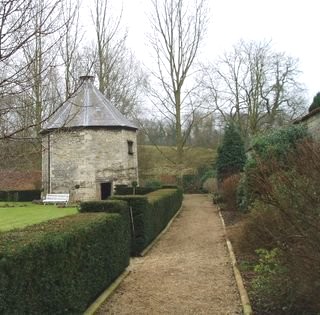
Back through the iron gate into the gardens again, and into the walled kitchen garden. There was a dovecote in the distance, but Marie-Astrid was beginning to get tired (still carrying her daughter) so we just carried on walking. One middle-aged couple approached the dovecote but stopped when masses of doves began to emerge in a state of panic ("Come away before there's another incident" the woman said loudly to her husband).

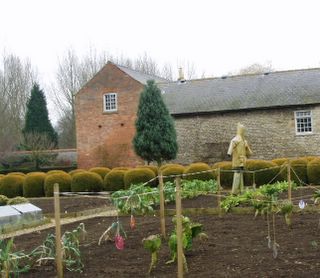
The kitchen garden was enclosed by high brick walls, and against the south facing wall was a row of substantial 19th century greenhouses, packed with exotic plants (including a display of orchids in full flower). Everything was immaculately presented. The labour necessary to keep up such a show must be immense (not just the exotic plants but the whole ensemble of landscape garden, flower garden, kitchen garden and hothouses).

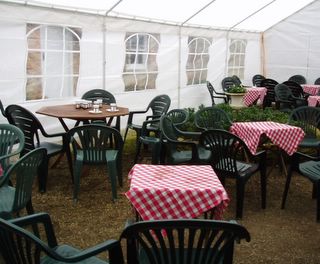
From the walled garden we went round into the stable yard and through a passage in the back of the house into the inner courtyard (the house is a square built around this court, further emphasising the sense of mystery, of penetrating through one barrier only to find another one put up). Almost filling the inner court was a marquee where teas were on sale.

I bought a tea for Marie-Astrid and a glass of milk and small iced cake for her daughter. Because I felt cold I had a cup of coffee (for some reason coffee always makes me feel warmer than tea). The marquee had been put up over the courtyard's flower beds, with an ornamental fountain in the middle.

We sat there for a while and I felt completely relaxed and comfortable, despite the damp air. In a corner the women serving the teas clattered about with their urns and pots and cups and saucers. It was impressive how much effort had gone into getting everything looking perfect for just a few hours on a damp Saturday afternoon in February.

Wednesday, February 08, 2006

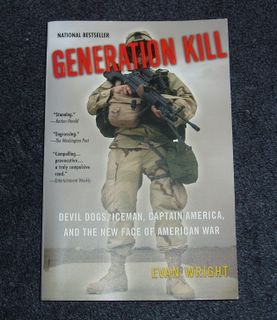
Generation Kill by Evan Wright


Recently I have been reading Generation Kill by Evan Wright. It is an account of the invasion of Iraq seen from the point of view of the frontline troops, as interpreted by journalist Evan Wright. I bought the book at the airport in New York, when I was returning from staying with Robert Leiper. It was an impulse purchase, and I mainly bought it because it said on the cover "...the new face of American war". I reasoned that the Iraq war was the most important on-going event in the world at the moment, and therefore I ought to take an interest in anything "new" about the conflict. The jacket claim proved to be a misleading statement however, as the work turned out to be a fairly conventional account of warfare.

What was remarkable about the book was the sense of immediacy of the writing. Evan Wright was an embedded journalist, and traveled with a United States Marine Corps platoon as it captured bridges, drove through urban ambushes, shot up Iraqi villages. Among the troops Evan Wright inveigles himself so that they at first ignore him, then tolerate him, and finally include him as a target for insults (indicating his acceptance).

Once on a level with the platoon he records their conversation with a Kiplingesque feel for the colloquial expressions of fighting men. He is careful to avoid satirising the platoon members, although one detects a certain level of irony in the way in which he reports verbatim the opinions of the private soldiers (are marines "soldiers"? or are they "marines"). They have many opinions about the way in which the war was conducted, the primitive conditions in which the Iraqi people live, the degeneracy of modern American society (how the war was intended to support the high living standards of the American middle classes, how it was a racist adventure waged by white people against non-whites, how Justin Timberlake represents the nadir of American morality).
Despite the excellence of the writing there was the impression that the book was a little contrived. Evan Wright never ever reveals his true thoughts. And there seemed to be a pre-conceived theme of lions led by donkeys (the officer referred to as "Captain America" was a one-dimensional figure - surely no-one could be that incompetent?). For a graduate in medieval history the author is curiously uncurious about the history and culture of the country through which he is passing. No parallels are made with previous historical episodes, so there is hardly any context. With more effort he could have written his own Seven Pillars of Wisdom.


Several times Justin Timberlake is identified as a motif for the decadence of American youth as opposed to the more sterling qualities of the United States Marine Corps. The platoon(s) examined in the book are mostly comprised of teenagers and people in their early twenties. One of the more surprising things that comes out of the book is the enthusiasm with which the troops enjoy killing people (not sure why I should be surprised at this, as it is what they are trained to do - perhaps I was expecting the act of killing to be veiled in euphemisms rather than described so graphically). Despite the great size and power of the American military machine America is not a martial society, and the army does not symbolise the nation in the same way as the Royal Navy in the United Kingdom or the army in France or pre-1945 Germany. Americans tend to value individualism and rebelliousness to authority. In that respect Justin Timberlake is more representative than the average USMC marine.


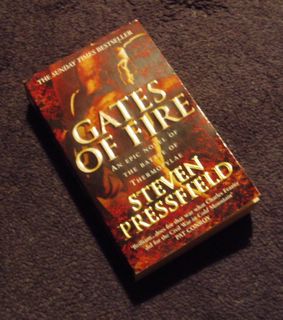
Early on in Generation Kill Evan Wright refers to the novel Gates of Fire by Steven Pressfield which records the heroic Spartan clash with the Persians at Thermopylae in 480 BC. Possibly Evan Wright has sub-consciously absorbed the style of Gates of Fire and translated it into the setting of modern Iraq (Wright is as good a writer as Pressfield). For all the descriptions of military squalor, cynical attitudes and lethal incompetence, Evan Wright portrays his subjects in an idealised and heroic mode.

Another literary parallel would be the Alexiad of Anna Comnena (I’m thinking of the episode when the crusaders arrive in Constantinople – a brutal Western intrusion into an effete and autocratic Eastern city). A couple of years ago I found an old and battered novel Private Angelo by war journalist Eric Linklater. It was a fictional account of the Allied invasion of Italy in 1944. As Linklater was a participant in the campaign I was expecting it to be filled with realistic detail. Instead it was a sentimental and entirely unconvincing portrayal. Although I finished the book (as per my rule of finishing every book I start) I did not enjoy the experience. Not to be compared with the writing of Alan Moorehead.

Monday, February 06, 2006

Bitterly cold recently


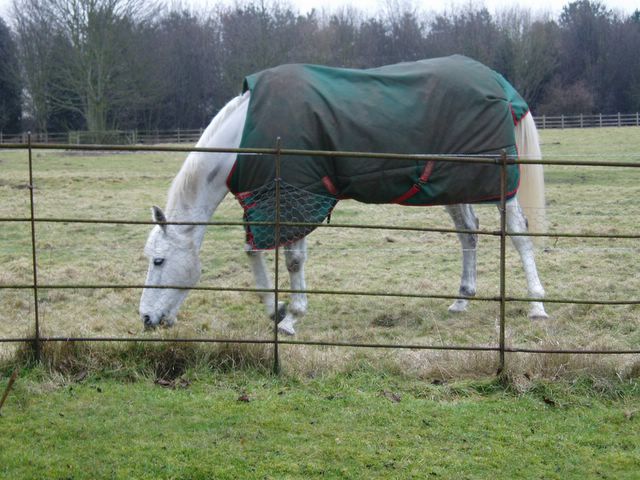
The weather has been so bitterly cold recently that the horses need their coats.

One of those Americans who are not really very American

Lunchtime I went to Ricos. Ham, cheese and tomato ciabbatta; cherry and sultana flapjack, cup of coffee. George Michael tape playing in the background.

Hardly any other people were in the cafe, except for the table right next to mine (they are small square tables, with low wooden chairs, everything cramped together in the small space). First a man sat down, then a woman - both aged in their late forties, early fifties. Why they chose the table next to mine, when there was so much space free, is beyond me.

The woman had a loud voice with a strident edge to it. From her conversation it was clear she was a social worker ("...I've got a domestic violence case on at the moment, one of those where it's six of one half a dozen of the other, it's pretty horrendous really..."). She was very bitter about the way she was treated at work ("I'm good at my job" - said with considerable emphasis and defiance, as if the fact had been questioned in the past - "...but they have to keep changing things. Graeme just looks at what's on the computer, not what's happening on the ground. They have all these graduate trainees running round but what use are they...").

The man had an American accent, but was one of those Americans who are not really very American - you meet lots of them in the United Kingdom, and it's only when you go to America you realise how un-American they are (I don't mean "un-American" in the McCarthy sense, I mean they are more European in their tastes and outlook). He commiserated with the woman about her job ("I've had positions which are just ticking the boxes all day"), and talked about his legal work. There was a weary air to his mood, indicating that he was bored with everything.

"Are you alright for time?" the woman asked him, "I've only got two files to read this afternoon, and I can't really be bothered with them." But the man said he had to go. They got up from their table and walked out the door, leaving lots of unanswered questions (how did they know each other? what was behind the desultory way they talked? were they lovers at the end of their relationship?).

Saturday, February 04, 2006

Finance and the world economy

During the week I left work early and met Gary Spencer. We drove across to Newmarket (Gary had traded his Jaguar for a new sports Saab - it’s a nice car, but not comparable with a Jag, which made me wonder whether his business was not doing so well). Night had fallen by the time we got there, a black night with no moon or stars.

We entered the gates of the Jockey Club and parked the car. As we approached the entrance I noticed we were being watched from a window in a side wing by two burly men in black suits (security?). From the freezing night we entered a warm, hushed world where everything seemed to be flawless. Long corridors, the walls displaying portraits of racehorses, led to a room that had been laid out with chairs arranged in four rows. In the corridor outside (wide enough to act as a reception area) the other guests were talking and drinking. We had arrived a little late and the meeting was about to start, so we took our glasses of wine into the seminar room and sat down (as Gary requested, one of the staff brought us in two cups of coffee).

The presentation was on finance and the world economy. Bonds are out for this year, Japan is in, Germany is one to watch as their economy may be a rising star. China is booming on the basis of manufacturing, India is booming on the basis of services (particularly in partnership with United Kingdom companies), America is doing well despite the debt situation.

Halfway through the evening there was a break and we went into the next room, a large and well-appointed sitting room, where a buffet meal was served. The food was very good and had a quality of dissolving in the mouth, so you got lots of flavour but hardly any texture. Loading my plate with sandwiches and pastries (I was very hungry) I went to join Gary Spencer warming himself in front of the big open fire. Above the fireplace was the famous Stubbs painting of the racehorse Gimcrack. On either side of us were long sofas occupied by elderly financial advisors. Almost all the other guests were in their late fifties or early sixties apart from one teenager with gelled hair and spots on his face (widely spaced spots so that they resembled the stars of a constellation).

“Obviously a trainee” said Gary Spencer dismissively. I reminded him of when he had been a trainee and had been snubbed by the higher echelons of the bank he worked for. He had been so galled by this treatment that he had left the bank and set up his own consultancy (everyone expecting him to fail).

Taking advantage of the break I walked along to the toilets - some distance from the seminar room, then up one step and through a heavy door. This lavatory was, in its old-fashioned way, magnificent. I was particularly impressed by the big ceramic sinks - so impressed I took a photograph.


Above: I was particularly impressed by the big ceramic sinks (notice the paper towel which I accidentally dropped on the floor - I'm not normally untidy).

Returning to the meeting I passed a display cabinet with various horse-related items, including the hoof from a mummified horse found at Sakkara in Egypt. This object demonstrated that the horse has been revered for thousands of years. Nowhere is equine reverence more profound and sincere than at the Jockey Club.

Friday, February 03, 2006

It is possible that bird flu is already in the country and infecting people and the evil lying government that we have is suppressing the news

On Wednesday I received the following e-mail from Gary Spencer about a mutual friend (more his friend than mine):

I received a call from Mark Sands last night.
Roy is critically ill in intensive care at The ***** Hospital in *****.
He developed a yet as unidentified virus and now has a collapsed lung and his body is in a state of trauma.
He is in isolation and is constantly sedated.
All we can do at this time is wait and hope for the best.

This morning Gary sent me the following e-mail:

I went to see Pam last night and the news about Roy is very good. The doctors are 90% sure they know what the virus is and are just waiting for the results of a test to confirm this. They think it is a virus that is picked up from birds that attacks the lungs, the body normally takes 7 days to start producing the antibodies to fight it, it appears Roy has started to do this. The doctors have taken a blood sample to analyse to se if these antibodies are present and this will also confirm if the virus is what they suspect. Having had a trachiotomy (I apologise if that is spelt wrong) on Thursday the doctors were able to bring Roy almost fully out of sedation and he was able to communicate with Pam by pointing to letters on a sheet of paper. He appears to have started the recovery process and is out of danger. Pam thinks in 2 - 3 days he may be moved from intensive care to a high dependency ward at which time he would be able to have visitors.
All in all thinks are looking a lot brighter after a very worrying week.

I sent the e-mail:

"They think it is a virus that is picked up from birds" - is this bird flu???

And I got the reply:

This has been asked, but they will not confirm it, I guess that they do not want a panic.

So it is possible that bird flu is already in the country and infecting people and the evil lying government that we have is suppressing the news because they want to avoid criticism for not preparing early enough.

Monday, January 30, 2006

You either feel comfortable in one of these stores or you don't

Yesterday I went into a local Carphone Warehouse. All these mobile phone retail outlets have the same sort of sales personnel - hyperactive, over-enthusiastic, slightly manic. They talk with a sort of musical tone to their voice, as if they have memorised their sales pitch and are singing the words to you to give the proposition depth and variety.

The stores are minimalist in style, focussed on the tiny high-tech products. Everything is spotless, neat and tidy. The lighting is bright and unyeilding.

The seriousness with which these products are sold is intense. As with cars, it is the "added features" that are the crucial talking point. You either feel comfortable in one of these stores or you don't - they are not places for indifference.

“No-one expects the Spanish Inquisition!”

The Today Programme this morning had an item on the Spanish Inquisition, usually regarded as reign of terror in late-medieval / early Renaissance Spain.

Umberto Eco, in his novel The Name Of The Rose, has a character called Bernard Gui who is portrayed as an evil bullying fanatic (a sort of medieval George Galloway). This is historical distortion – Bernard Gui was a real inquisitor (and bishop and judge) who sentenced 930 “heretics”, 42 of whom were later burned (horrible result but not really a massacre by the standard of the times - not really a massacre by the standard of our times either). The inquisition in Languedoc (as well as Spain) was as much about the state extending political control as the church ensuring theocratic conformity.

The Spanish Inquisition has entered popular consciousness. In the office recently Sarah Linton, emerging from a meeting with Marc Bottoni said bitterly: “I didn’t expect the Spanish Inquisition”. The IT team, who are on the same floor, cried in unison: “No-one expects the Spanish Inquisition!” (a reference to the comedy show Monty Python – Sarah Linton just gave them a scornful look, as if disgusted that grown men should be so puerile).

Sunday, January 22, 2006

Big tureen on the table - you just helped yourself

Saturday. Dinner at Marie-Astrid’s house, Julie also there. It was a vegetarian meal, consisting of a huge vegetable stew (in a big tureen on the table - you just helped yourself) with home-made bread. Afterwards a fresh fruit salad that contained nuts and ginger. Playing from Marie-Astrid’s PC was music she had downloaded earlier (Beautiful Soul by Jesse McCartney, Honesty by Alex Parks, Crown Imperial by Sir William Walton etc). Marie-Astrid announced that her divorce had come through that day, and then talked about the break-up of her marriage (“He went on a course for men about to leave their wives - how self-indulgent is that!”). I asked Julie (who is Scottish and has a very pronounced Scottish accent) about what she thought of devolution but she was totally uninterested in Edinburgh politics (“I am not a die-hard Scot” she said scornfully, “all that haggis and bagpipes nationalism gives me the creeps”).

Afterwards we disagreed about what to watch on television, and reached a compromise - I would put up with Celebrity Big Brother if I could see an hour of Shoah afterwards.

Celebrity Big Brother has all the attributes of pornography - voyeuristic, abusive, humiliating. It is compelling to watch, but left me feeling depressed. Applying the principles of transactional analysis (that we relate to other people in one of three ways: child, parent, adult) everyone in the arena seemed to be either a parent or a child, with brief adult exchanges occurring on the sidelines. A parade of bullies strutted around the various rooms, intimidating, shouting, making people cry. A supposedly right-on “ordinary” singer whined at having liquid soap poured over his cashmere jumper. A supposedly right-on politician (George Galloway) seemed to float around the room sets whispering, manipulating, egging people on (degrading himself to the level of the Neil and Christine Hamilton political freak show).

Shoah (shown on the More4 channel) is a very great film. I have seen parts of it before, but not all of it (it’s nine and a half hours long). Despite its great length it is never boring. It is an historical documentary of the very finest quality. Directed by Claude Lanzmann, it combines scholarship with the absorption of a detective murder mystery. Although a new channel, More4 is continually setting high standards in broadcasting.

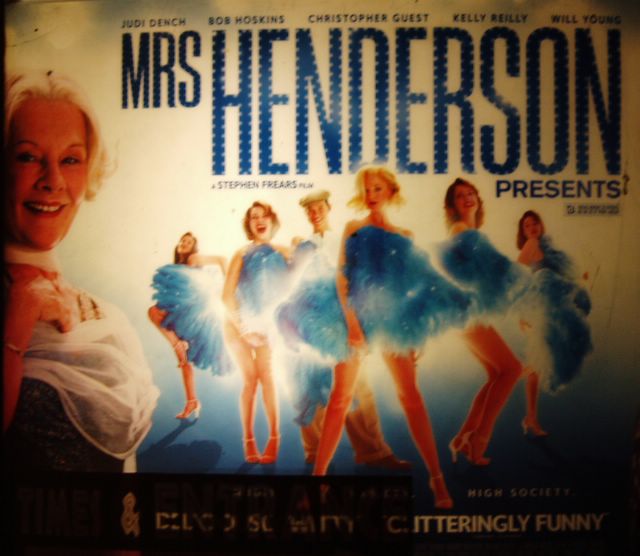
Mrs Henderson Presents… Judi Dench, Will Young and Kelly Reilly


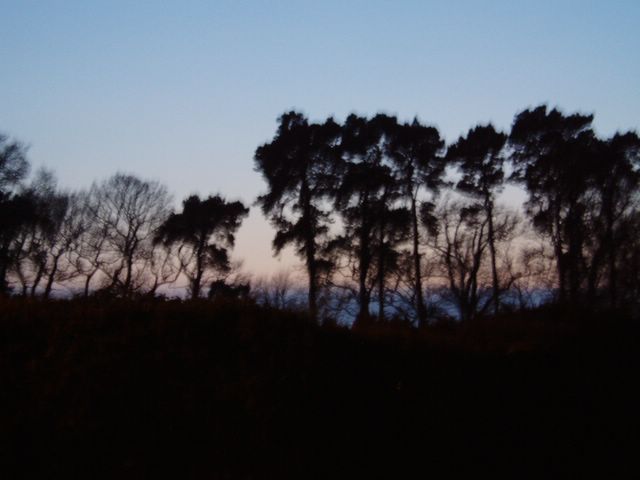
(Above): the last light fading behind the pine plantations

Sunday. Late afternoon was merging into early evening as I drove down the wide straight streets of an isolated and forgotten Edwardian spa town, the last light fading behind the pine plantations that encompass the little resort. I was early, and so I drove around for about twenty minutes - all the time it took to survey the four main avenues that make up the place. The settlement has a great deal of architectural unity (Pevsner calls the style “large, affluent and soporific”) , being constructed between about 1880 and 1920. Lots of very small shops (none of them chain stores), tea houses, care homes and rest homes. A vast, rambling, half-timbered hotel adjacent to a golf course. Other hotels, just as substantial but not so gargantuan. Gothic Roman Catholic church, sizeable red-brick arts and crafts Anglican church. Set back from the road and protected by shrubberies were private villas, detached and discreet, enveloped by the pine woods beyond.

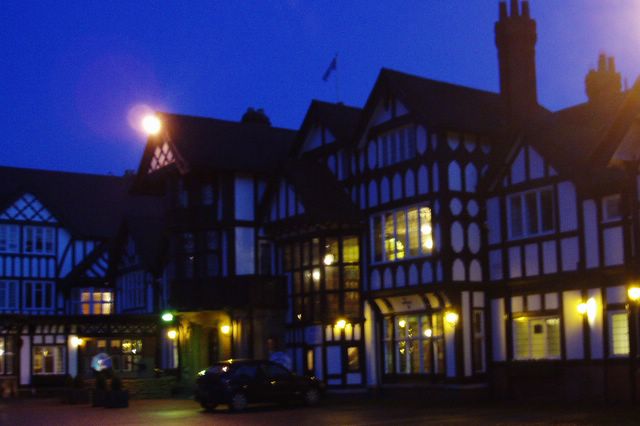
(Above): the half-timbered façade of the building lit up by golden light

I drove to one of the largest of the town’s hotels, in a plantation of its own, surrounded by spacious gardens (towering rhododendrons). Parking my car at the front, the gravel crunched underfoot as I approached the main entrance, the half-timbered façade of the building lit up by golden light. The hotel was a preferred retreat of the three daughters of Edward VII (in the days when it was a private house) and later had a significant association with the RAF during the Second World War.

Meeting Marie-Astrid and Julie, we went into the main lounge for a drink (non-alcoholic as Marie-Astrid doesn’t drink and Julie, who is Scottish, was recovering from a massive day-and-night bender). Comfortable sofas and chairs, wood fire burning in the grate, murmured voices from the other guests grouped around the big room (“Family parties are so awful” said one middle-aged woman as the group she was with got up to meet another group approaching across the wide expanse of Axminster). When it was time for us to leave (we were going to the cinema) Marie-Astrid suggested walking through the woods, but changed her mind when we got outside and found a light drizzle was falling.

A few minutes later we were in another part of the town, in yet another wood, where the cinema was located. This building was a low 1920s pavilion, seemingly so insubstantial in construction that it is a surprise it has lasted so long. I offered to pay for the tickets, but the ticket office wouldn’t accept credit cards so Marie-Astrid and Julie ended up subsidising me.


We saw the film Mrs Henderson Presents. I was very impressed by the film, especially the performances by Judi Dench, Will Young and Kelly Reilly. Being a show about putting on a show, it could have become a thin framework for a succession of musical acts, but actually it held together as a coherent and integrated drama. The attention to detail was particularly fine. It was a very beautifully designed production - a lot a thought had gone into how things looked. Unfortunately the ending was weak and a little slushy.

Saturday, January 21, 2006


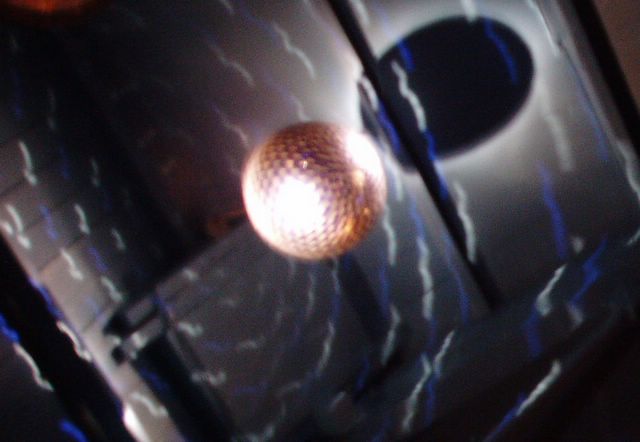
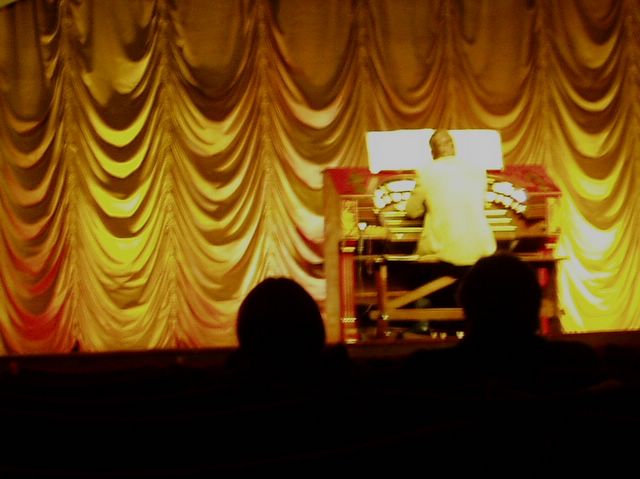
Being an old-fashioned cinema, there was an intermission half-way through. Most people went through to the foyer to buy drinks and confectionery. We remained in our seats, and watched as a red lacquer organ rose from beneath the stage, the organist playing a succession of old tunes (We’ll Gather Lilacs is the one that sticks in my mind). I thought at first this was a clichéd attempt to recapture the 1940s, but later realised it wasn’t a revival but a continuation of the way things have always been. As the recital ended and the organ began to sink down again the lights dimmed and a spotlight lit up a revolving mirror-ball suspended from the ceiling, causing specks of light to whirl around the auditorium. Everyone applauded.

(Above): a revolving mirror-ball suspended from the ceiling, causing specks of light to whirl around the auditorium

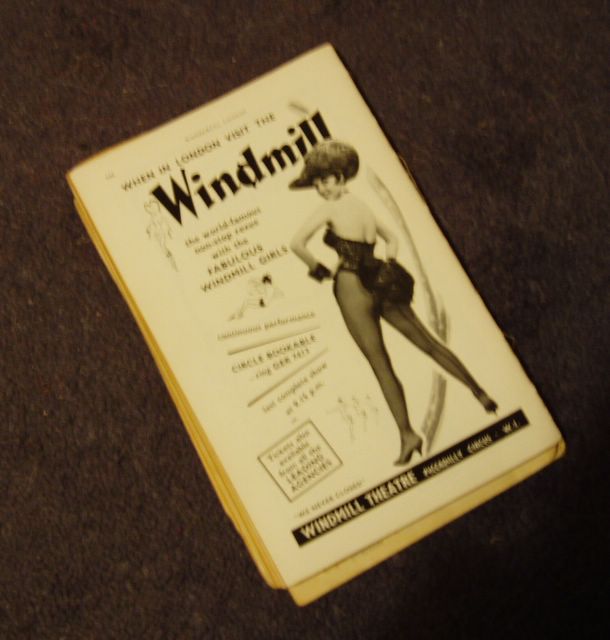
(Above): advertisement for the Windmill Theatre from a 1950s guide to London. "We never closed" is a reference to the way the shows continued all through the London Blitz.

(Above): the Windmill Theatre is still going. I took this photo last summer. Not sure what sort of shows they put on now.

Saturday, January 14, 2006

He told me that the Iranian situation is going to become very serious


(Above): We had our coffee in the vestibule-lounge, where we sat on a sofa looking into the bar

Thursday. After work I sat around until 6, then drove across to Buckden near Huntingdon. I had never been to the tiny town (big village?) before. I parked my car opposite a lively pub called The Vine and walked back down to The George hotel. The night was dry, but very cold. The long street was deserted (Buckden seems to consist entirely of this street, which must have been the old Great North Road before it was diverted into the A1 motorway).

The George Hotel is an old coaching inn that has been adapted into a comfortable hotel. It consists of a very long red brick Georgian block that rises three storeys and stretches for some length along the high street, the façade austere, punctuated half-way along by the old arch where coaches and horses would go through to the former yard. This arch has now been filled by the hotel reception area. The former yard is now occupied by an extension containing the restaurant and bar. I walked round to the side of the hotel where I could see a paved area (ornamental topiary in containers) with a simple white colonnade framing an modest entrance. Through the door, I entered a cream coloured vestibule that doubled as a lounge, furnished in reproduction Biedermeier (the whole establishment looked as if it had been recently refurbished). To my right was a small reading room with comfy chairs and a set of 19th century bound volumes of the Illustrated London News. To my left was the bar area. Directly ahead was a short passage leading to the hotel reception, and walking towards me was Gary Spencer.

Gary had suggested meeting at the hotel on his way back to Hertfordshire from meeting a client in Leicester. We went immediately into the restaurant which was bright, white and very smart. We were the only people in the restaurant for about twenty minutes and then it suddenly filled up, every table being taken. Wild boar in a rocket salad, venison with carrots and Dauphinoise potatos (I also had a side order of fat chips), sultana pudding with custard. One glass of Merlot wine. We had our coffee in the vestibule-lounge, where we sat on a sofa looking into the bar.

We talked about plans for the year ahead, and Gary suggested going to America in November and driving from Boston to Chicago. I suggested flying to Florida and driving westwards as far as Texas (a warmer alternative - the only thing I know about Chicago is that it is cold in November). We decided to ask Robert Leiper to join us.

Gary Spencer then became very grave (an unusual mood for him) and began to talk despondently about Iran and the likelihood of an international crisis in the Middle East. Being a financial advisor, he has a very narrow expertise which counter-balances his other interests of football, Florida holidays and family life. When he talks about politics it is not ordinary speculations based on items in the news media, but specific issues with financial implications. He told me that the Iranian situation is going to become very serious and that if I want to make some money I should be buying gold. I sat and listened to him without comment. And I thought: if things are really that bad, why aren’t we reading about it in the newspapers?

(Above): Driving to work across the plain on Thursday, I saw this winter sunrise

Saturday, January 07, 2006

Charles Kennedy (recently-resigned Leader of the Liberal Party)

I wish Charles Kennedy (recently-resigned Leader of the Liberal Party) had put up more of a fight. Although I havn’t (yet) voted Liberal, I felt he was a good bloke. He made me laugh when he appeared on TV shows. He didn’t take himself too seriously. He didn’t lecture people and go on and on at them about what they should be thinking / doing / not doing / not thinking. When he didn’t agree with something (like the Iraq war) he just voted against it without any of the lying and backstairs manoeuvring most of the other politicians got up to.

The fact that he is fighting a drink problem makes him more human. More interesting as a person. Perhaps David Cameron (new leader of the Conservative Party) will offer him a job?

Somehow my responsibility


(Above): …in showers of golden beams (like an Egyptian carved relief in homage to the sun-disc Aten).

First week back at work, and it was difficult to adjust to the routine - until suddenly the recent holiday faded into memory and the reality of the corporate world took over. There was one little diversion - the Managing Director, Marc Bottoni, has been encouraging me to spend more time over at the company’s eastern counties branch (more to assure the staff there that they are not completely cut off, rather than for any practical reason). So at the end of the week I arranged a trip over there.

At the eastern counties office there was the same flat atmosphere as at Head Office - half the staff still on holiday, no real activity by customers, empty look to the offices once the cards and decorations had been taken down.

I established myself at a vacant desk and began organising on a Word document my Things To Do list - a schedule of mammoth proportions since Marketing gets lumbered with hundreds of jobs no-one else can be bothered with. Among these thankless tasks is to respond to the many requests for charitable sponsorship the company gets (at least three or four per week). The company has a small sponsorship budget which is usually already allocated before it is handed over to me to administer (mostly sponsoring junior football teams which include players who are the sons of company staff). My job is to arrange some PR for the sponsorship we are committed to, and to sift through all the other requests and bring to the board’s notice anything I think the company should be doing. In practice this is an impossible undertaking since how do you decide to help one good cause over another? Also, the amounts of money available are so small that the impact of our sponsorship would be negligible (and thus impossible to justify since the Finance Director is bound to ask for hard reasons why we have given money away and what we have got back in terms of PR exposure).

But occasionally I come across a local charity small enough that our money will have an effect, and yet worthy enough to survive the cross-questioning in a board meeting (unlike the usual supplications to support hospital radio, assist playing field associations, fund student children of directors while they “volunteer” during their gap year).

So towards midday I left the eastern counties office and drove through the countryside about ten miles. The sky was mostly composed of a grey blanket of cloud through which the sun occasionally penetrated, in showers of golden beams (like an Egyptian carved relief in homage to the sun-disc Aten). The roads became increasingly rural, the views to either side displaying the drab dull detritus of winter.

Eventually arrived at a tiny village. In the grounds of a Carmelite convent I stopped at a red brick residence which had been made over to a children’s hospice. I was there about two hours talking to the fund-raising officer about ways in which the company could help (a long-term relationship rather than just a one-off grant of money). We went on a tour of the building and garden and came across one of the staff with a small toddler called Anthony in a push chair.
“He’s got water on the brain…” the carer said, “…he wasn’t expected to live this long.”

The fund-raising officer explained that a lot of what the hospice did was to take in children so that their parents could rest. It was a very thought-provoking visit. I felt that the children were somehow my responsibility.

On the way back it began to rain - quite heavily for a while. I stopped at a shop to buy a newspaper. Two soldiers in camouflage were in the shop doorway debating the rain, and eventually they decided to run (they ran in step, heavy boots thudding on the road).

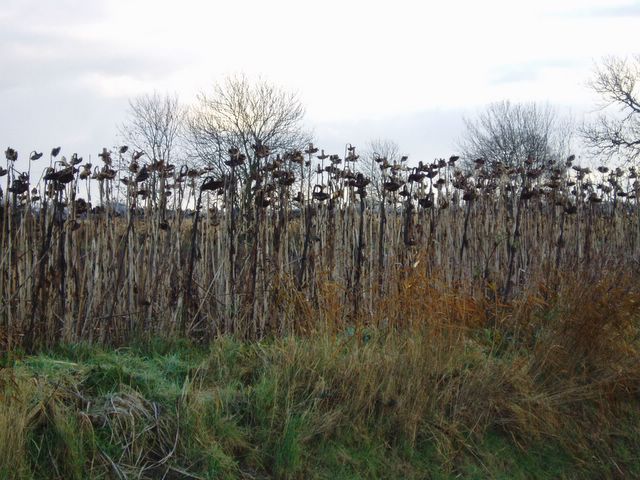
(Above): the drab dull detritus of winter

Sunday, January 01, 2006

A letter from Robert Leiper


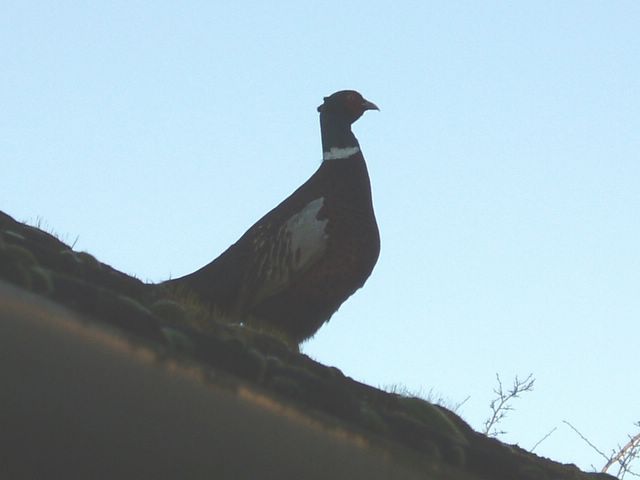
(Above): Pheasant that took refuge on one of the outhouse roofs.

Wednesday, Thursday, Friday - for three days I was at home alone (only the dog for company). I had been looking forward to this period of peace between Christmas and New Year, intending to catch up with so many things before I began work again. I imagined I would finish a big project, do some freelance writing, get to the end of a book (a biography) I have been reading since November.

In reality I hardly got anything done. I would get up at 9, sit around until lunchtime, fall asleep (despite having huge amounts of sleep over the past week I always seem to be tired). Then on Wedneday snow began falling, so that effectively the house was snowed-in (not entirely cut off - just unwise to take the car out as I would have to go through a mile of uncleared snow until reaching a main road). Instead of enhancing my solitude it had the reverse effect, and I began to remember all the things I urgently needed to do in the town. Also, I had given no real thought as to meals, and had to subsist on remnants of party food (half bottles of flat champagne, almost-stale pastries, milk that was five days old). There was plenty of Christmas cake, mince pies, packets of crisps, but I wanted steak, fresh bread, even some chips.

Friday the snow finally began to clear as rain fell, eventually creating a watery slush. The postman got through, bringing a long letter from Robert Leiper, which I put on one side to read later. I managed to take the dog to the end of the lane, getting my feet soaked in the process. At midday a group of local farmers appeared in the fields around the house and began shooting pheasants. They were dressed in waxed jackets and flat caps, accompanied by an assortment of dogs. They positioned themselves round the edge of each field, then three or four of them methodically walked through, shooting as they moved. Pheasants are not supposed to be intelligent birds, but some of them knew enough about what was happening to take refuge in our garden. One of them even perched up on an outhouse, parading defiantly in full view of the guns. When my parents were alive the farmers would ask permission to walk through the lower half of the garden while shooting, but they never ask now (perhaps they realise I would say no).

Having wasted most of the day in idleness (loafing around, watching bad television, day-dreaming about leaving my job) late in the afternoon I finally got round to reading Robert Leiper's letter. It was written on yellow exercise paper and carried the address of a farm in northern California. He talked about the cabin he was staying in, overlooking valley slopes covered in vineyards. He described the simplicity of his life compared to the complexity of living in New York. He gave an update on the progress he is making on his book (ostensibly the main reason he moved to California). On the surface the letter described someone getting his life together after the disastrous experience with "CW", focussing on the important goals he wants to achieve, simplifying his surroundings so that distractions were at a minimum.

And yet...

The whole letter, to my mind, conveyed a sense of longing and emptiness, as if the flight to California hadn't achieved the desired effect of "getting over" CW. CW was the overt subject of two paragraphs, and the subvert topic of the entire letter. He even mentioned coming over to England in the Summer (obviously with the intention of going to Sussex and provoking a meeting with CW - which can only have one consequence!).

Robert Leiper is one of those individuals who are too sensitive for their own good. How many put-downs will he need to endure before he finally realises the relationship can't be revived? Also, CW on her own ground, and surrounded by her intimidating family, is going to be much more formidable than the innocent art critic adrift in New York.

Like the pheasant parading on the rooftop, Robert Leiper in England is going to be an exotic creature asking to be shot down (metaphorically speaking).